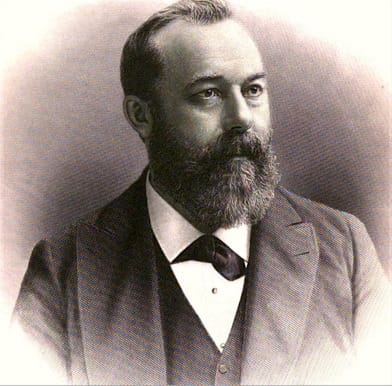
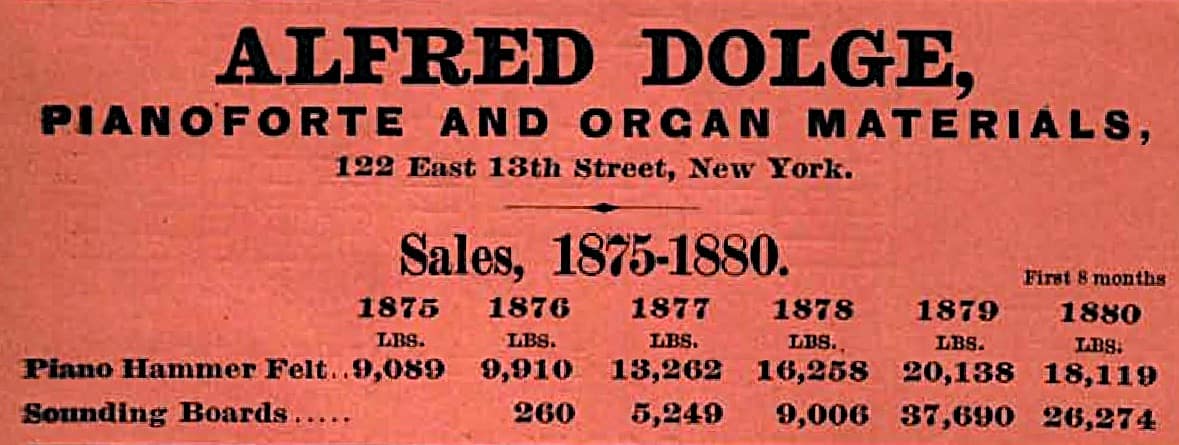
Alfred Dolge adverisement in the Music Trade Review, 2o September, 1880.

Alfred Dolge advertisement in Music Trade Review, 20 February, 1882. Note the use of the original town name, Brocketts.
Alfred Dolge (b. 22 Dec 1848 Chemnitz, Sachsen, Germany; d. 5 January, 1922 Milan, Italy) was a major figure in the American piano industry, he remade the small town of Brockett’s Bridge, on the edge of the Adirondacks, into what became Dolgeville, to make soundboards, hammers, and other components in 1875. Dolge invented a new hammer-making press, which is still used today by some hammer makers. He also developed and produced a cylindrical 5′ soundboard planer, which could process 300 soundboards a day in comparison to a single craftsman who would be able to hand plane perhaps ten soundboards, at most, in a day. His factories permitted a number of piano manufacturers to outsource more components in their pianos, lowering costs, and making pianos more affordable for the middle class.
Dolge wrote Pianos and Their Makers in 1911, a veritable who’s who of the American Piano industry during his working lifetime. But perhaps Dolge’s most important contribution was his practice of providing his 2,000 workers with pensions, profit sharing, and life insurance. He wrote about this in his book The Practical Applications of Economic Theories in the Factories of Alfred Dolge (1896). His ideas gained attention in Germany and France.

Alfred Dolge’s signature, and quotation from John Dryden’s (1631-1700) poem, “Happy the Man,” inscribed in a first edition, volume II, of Pianos and Their Makers.
Alfred Dolge’s signature, and quotation from John Dryden’s (1631-1700) poem, “Happy the Man,” inscribed in a first edition, volume II, of Pianos and Their Makers. Dolge believed in good wages for workers, partly out of a sense of fairness, but also because he saw them as consumers foremost, which was seen by some as a betrayal of his class. Dolge was forced to relinquish his businesses by what amounted to a conspiracy in April 1898.
James H. White, was involved, along with his father and brothers, with Estey Piano and Organ Co., and later, Wilcox and White Co., makers of the Angelus Player piano.
Here is an 1892 catalogue picture of the Alfred Dolge Factory complex, including the American Felt Company and soundboard factory, also known as the Dolgeville Mill.
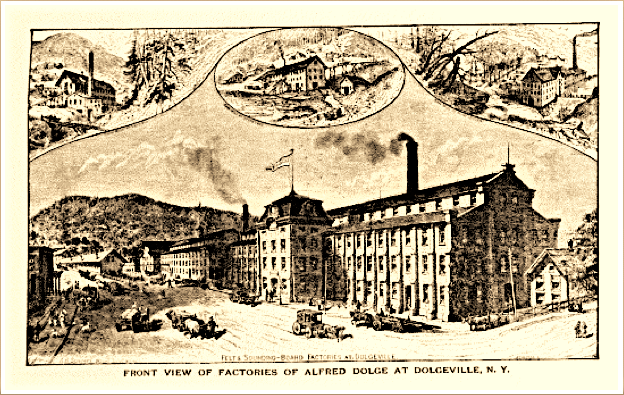

Alfred Dolge’s New York Warerooms, 1869-1892 catalogue.
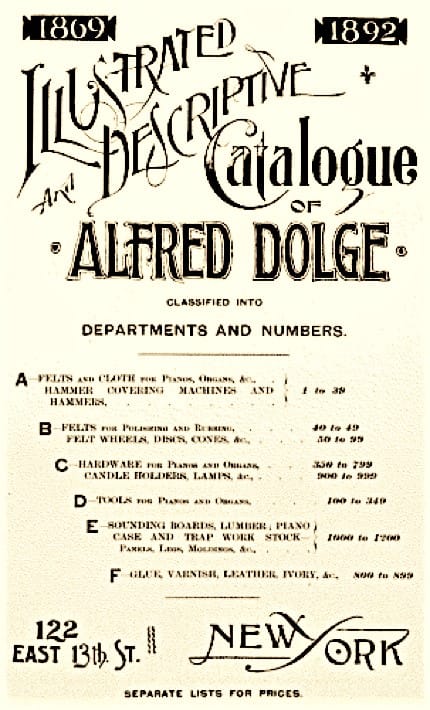
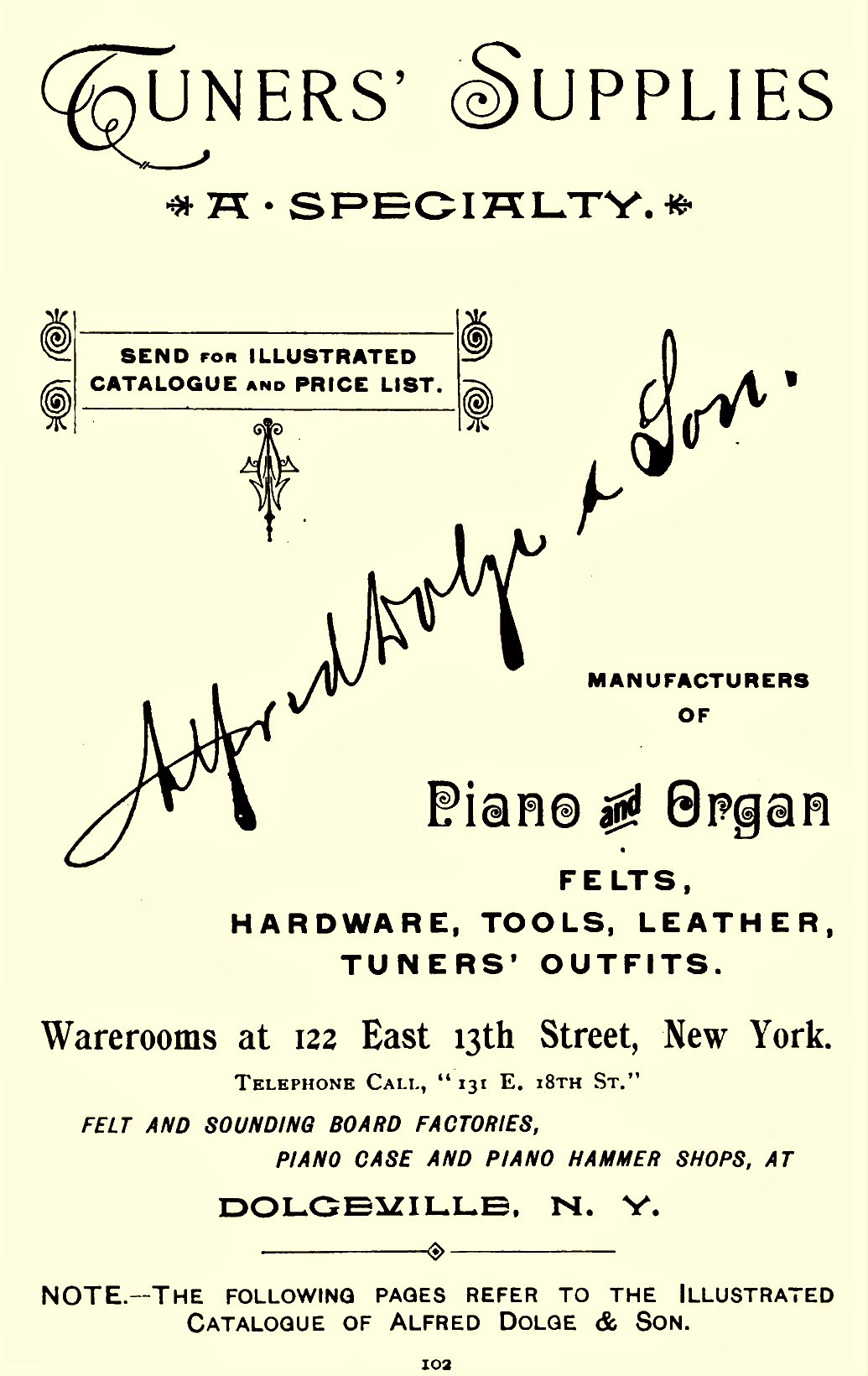
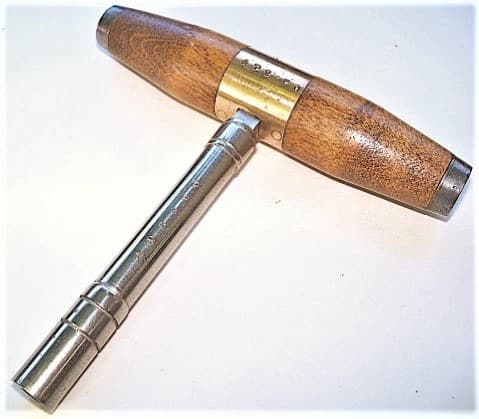
Alfred Dolge’s “Tuners’ Supplies.” No known connection with Hale’s “Tuners Supply Co.” The monikers “Tuners’ Supplies” (Dolge), or “Tuners Supply Co.” (Hale), while descriptive of the nature of their respective businesses, were also somewhat generic in nature. Any similarity of the titles was coincidental; the machining characteristics, or ‘signatures’ of the products from the two sources of piano tools were distinct and recognizable as such.
Dolge’s “Tuners’ Supplies” advertisement appeared as a five page insert in the back of the 1893 book, The Piano; Scientific, Technical, and Practical Instructions relating to Tuning, Regulating, and Toning by Daniel Spillane. (b. June, 1859 Cork, Ireland–d. 21 October, 1893 New York, N.Y.) Spillane was mostly known for his 1890 book, History of the American Pianoforte; its Technical Development and the Trade. Frank W. Hale had his own machine shop, which produced his tools, at 88-94 Wheatland St., in Somerville, MA. Dolge’s piano tools were produced in large part by the Erlandsen Co., in New York City (to Dolge’s specifications), with a possible in-house machine shop as well.

G. Grand
U. Upright
S. Square
Sounding Boards:
G. Grand
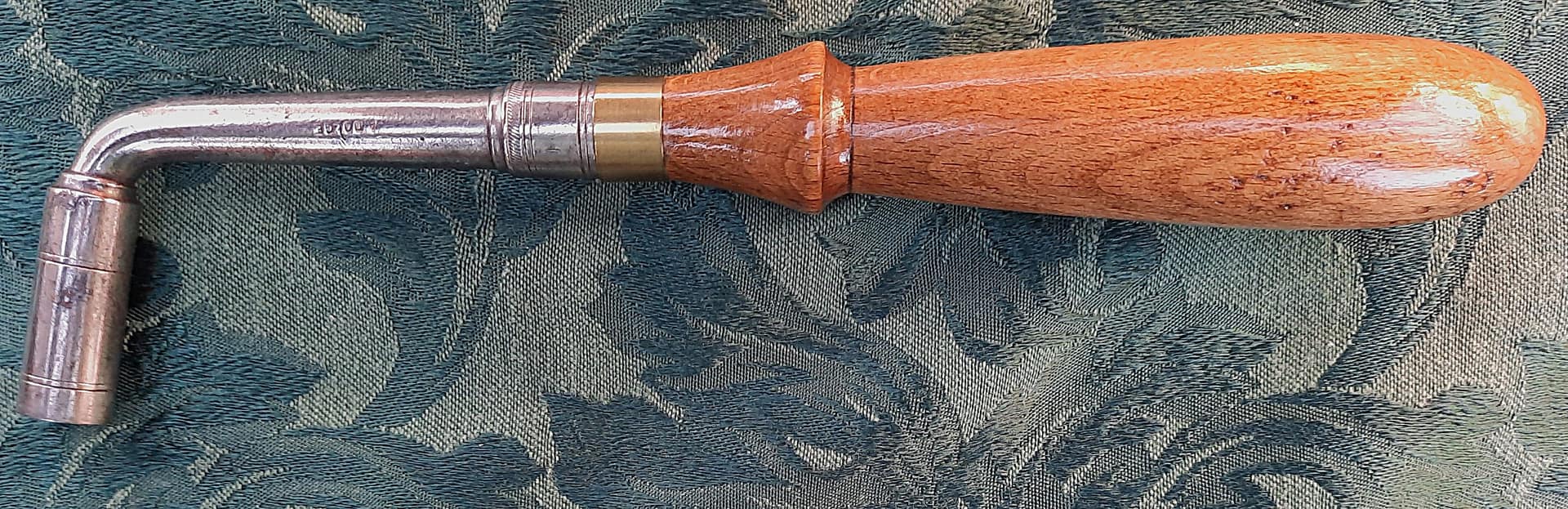
A. Dolge Gooseneck Tuning Hammer. Coming from Germany, Dolge would have been comfortable thinking of the Gooseneck Hammer as Quality 1.
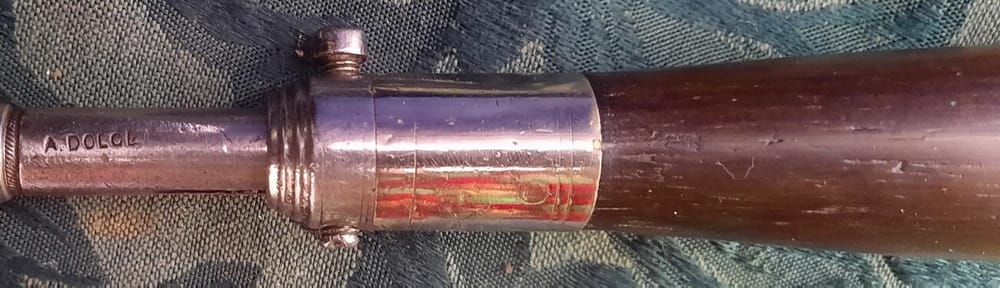
A. Dolge extension hammer, post-1892; after close examination, it was almost certainly made by Erlandsen.

Two A. Dolge tuning hammers, in the traditional German, or stimmhammer, style, with screw-in gooseneck stems. The “A. Dolge” tools date from 1892 or earlier, before Alfred’s partnership with his son, Rudolf Dolge.
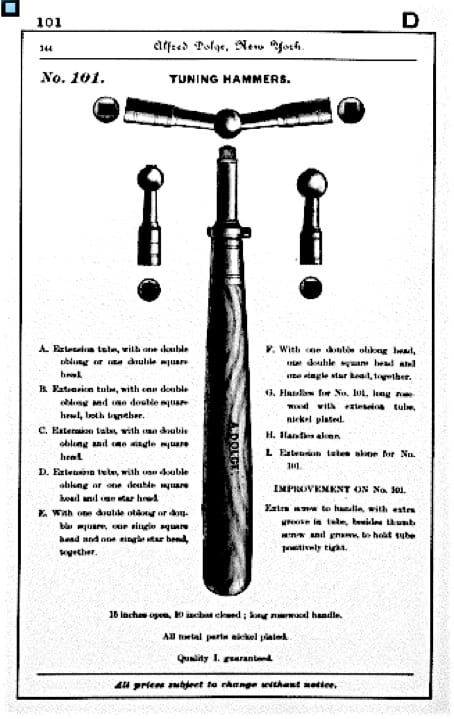
Dolge (Erlandsen) extension hammer, as shown in the 1869-1892 Dolge Catalogue.

Universal tuning hammer, asymmetrical. This one came with the “T” tube marked “A. Dolge.”

Tuners’ kit, depicted in the 1869-1892 Dolge Catalogue.

Dolge shaft attachment for “T” hammer.
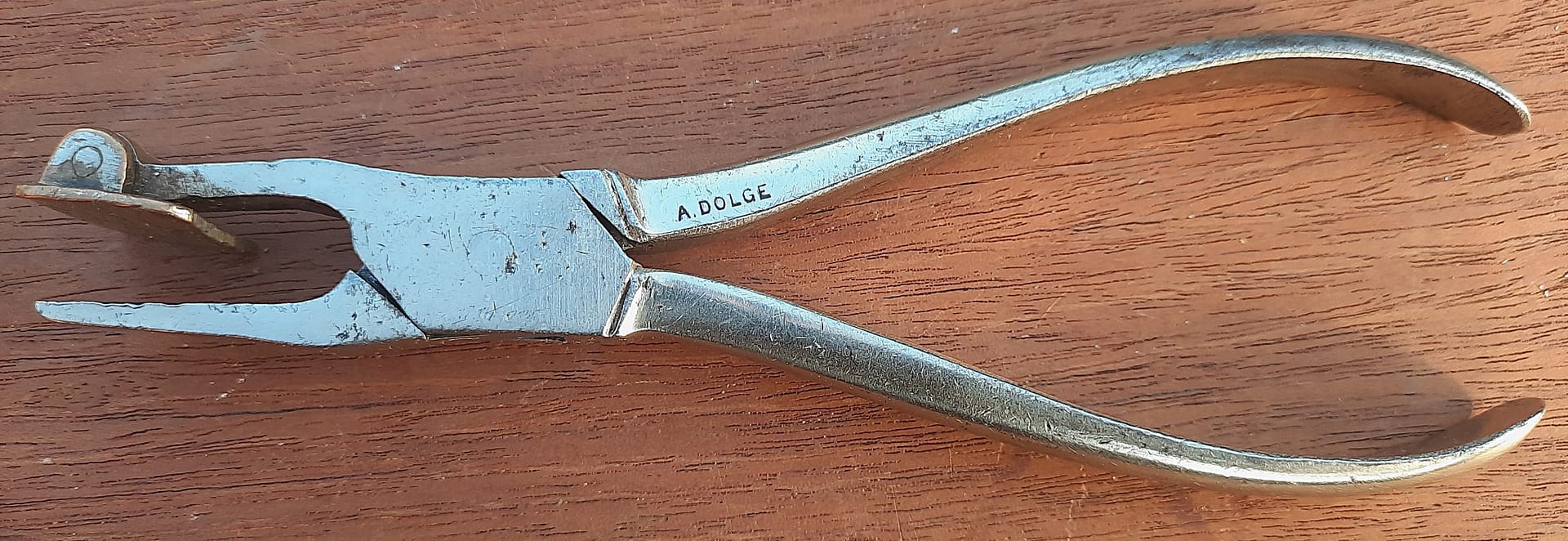
Alfred Dolge key easing pliers, lightweight type.
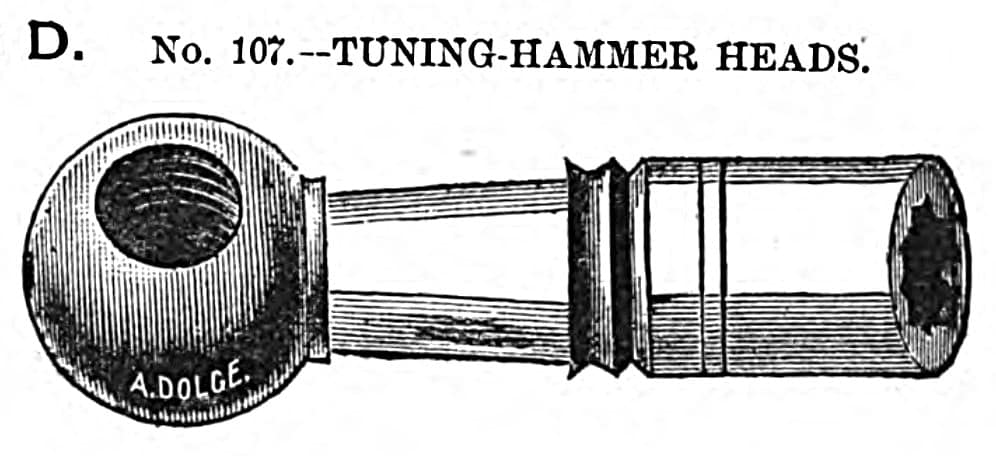
Dolge.Tuning Hammer Head.
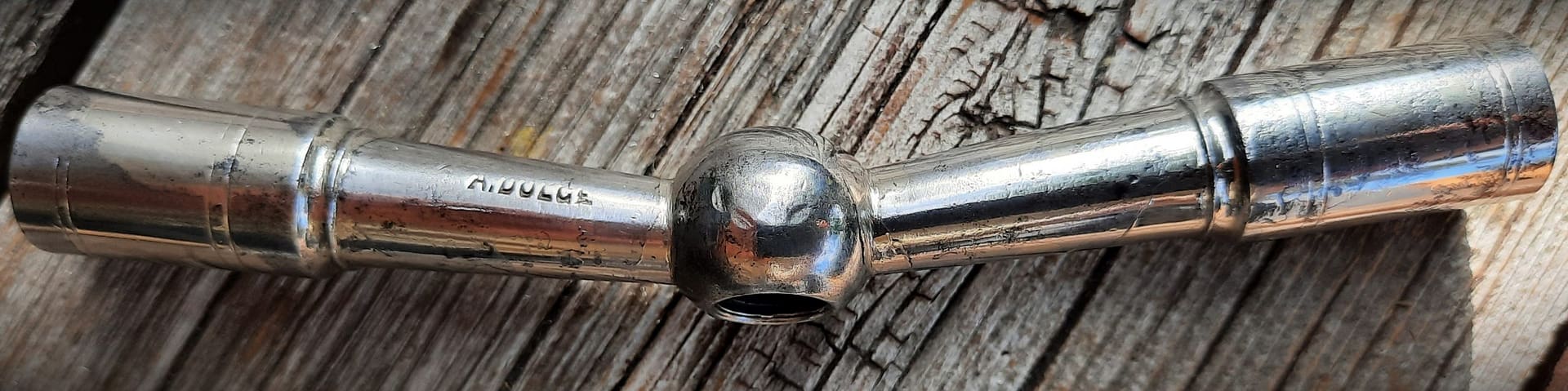
Alfred Dolge Double Oblong Socket Tuning Hammer Head, circa 1890.
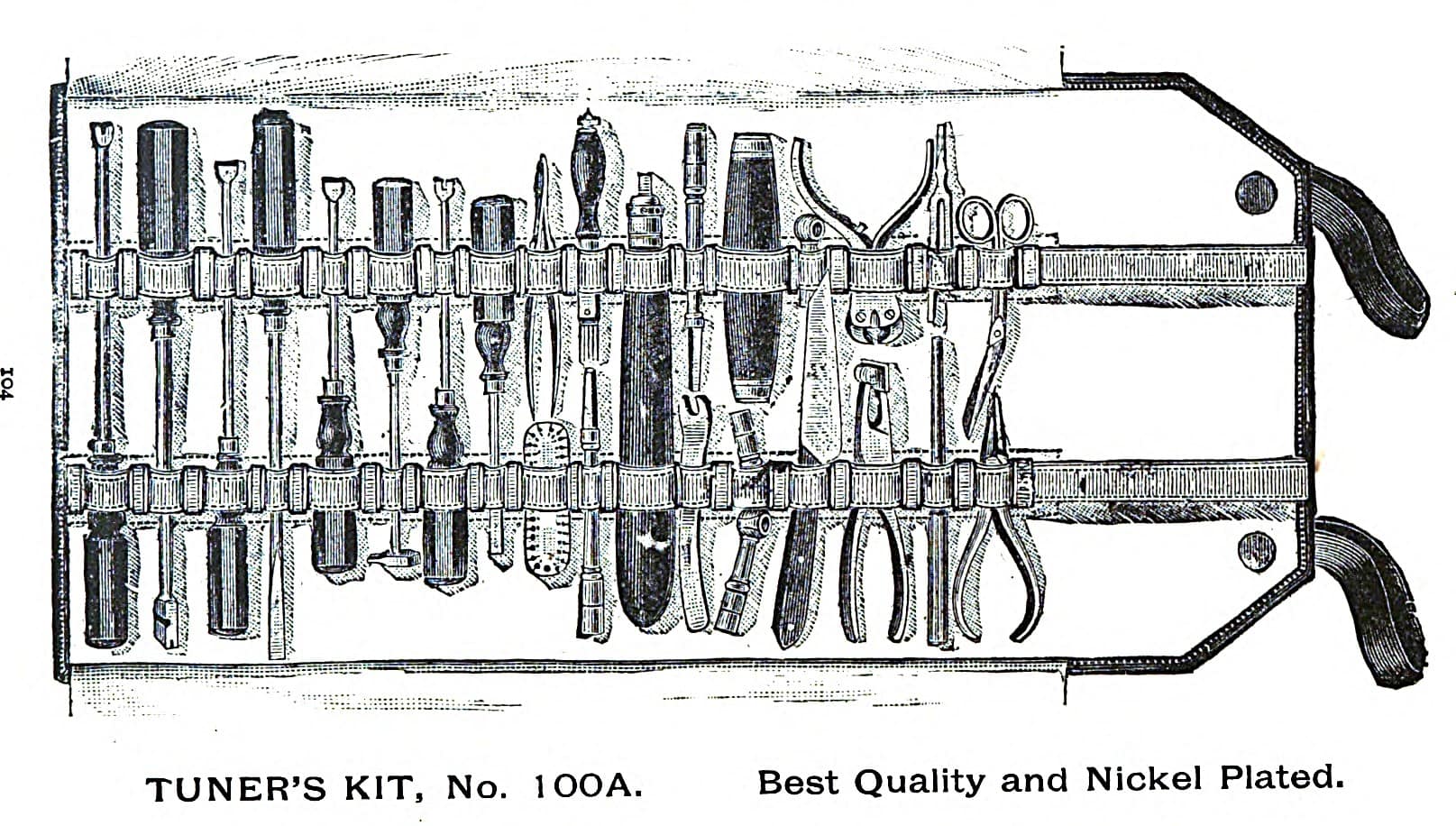
Dolge Tuner’s Kit, no 100A. Best Quality.

Not everything was pictured: two tuner’s wedges, extra square head for tuning hammer 101, spring ivory clamp, Pocket glue pot, and small plane.
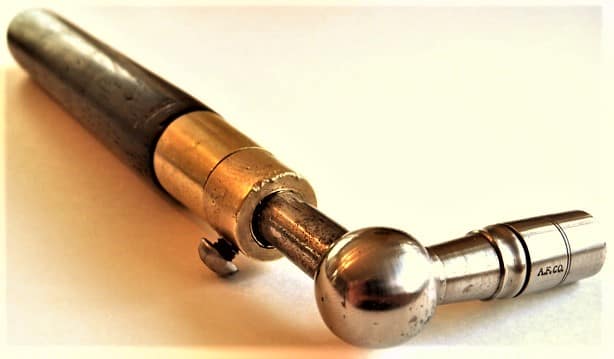
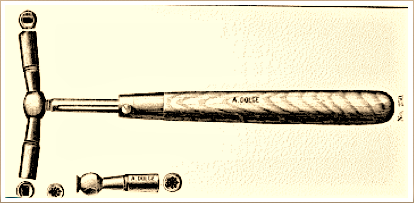
Similar hammer, as to the example in the 1892 Alfred Dolge Catalogue.
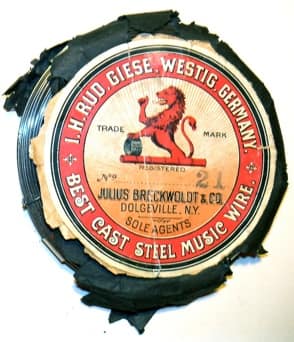
Giese piano strings, sold by Julius Breckwoldt, having succeeded Dolge, after Dolge left upstate New York in 1899. Breckwoldt also sold soundboards out of Dolgeville after Alfred Dolge left.

Breckwoldt & Co., Dolgeville, NY. Advertisement in Music Trade Review, 1916.
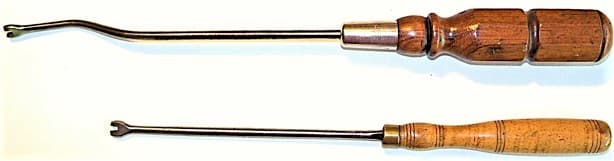
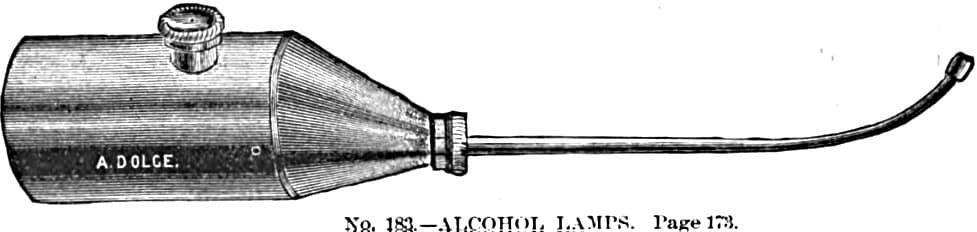
Dolge alcohol burn-over lamp. For bending hammershanks.
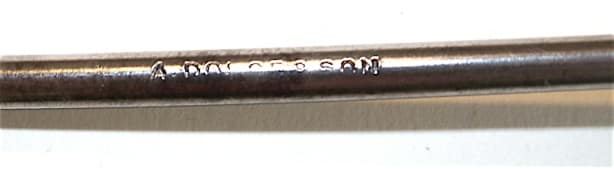
A. Dolge & Son regulating tool, close-up of stamp.


Alfred Dolge moved his felt manufacturing to Alhambra, CA, after the turn of the 20th century. Dolge advertisement from “Music Trade Review,” 1905.
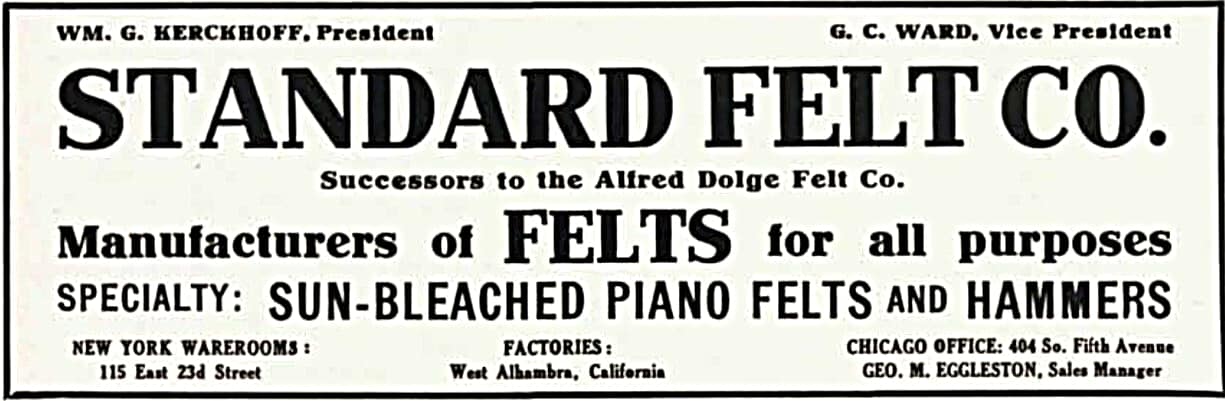
Dolge retired, and the Dolge Factory in Alhambra, CA became the Standard Felt Co. Advertisement in “Music Trade Review,” 12 January, 1918.
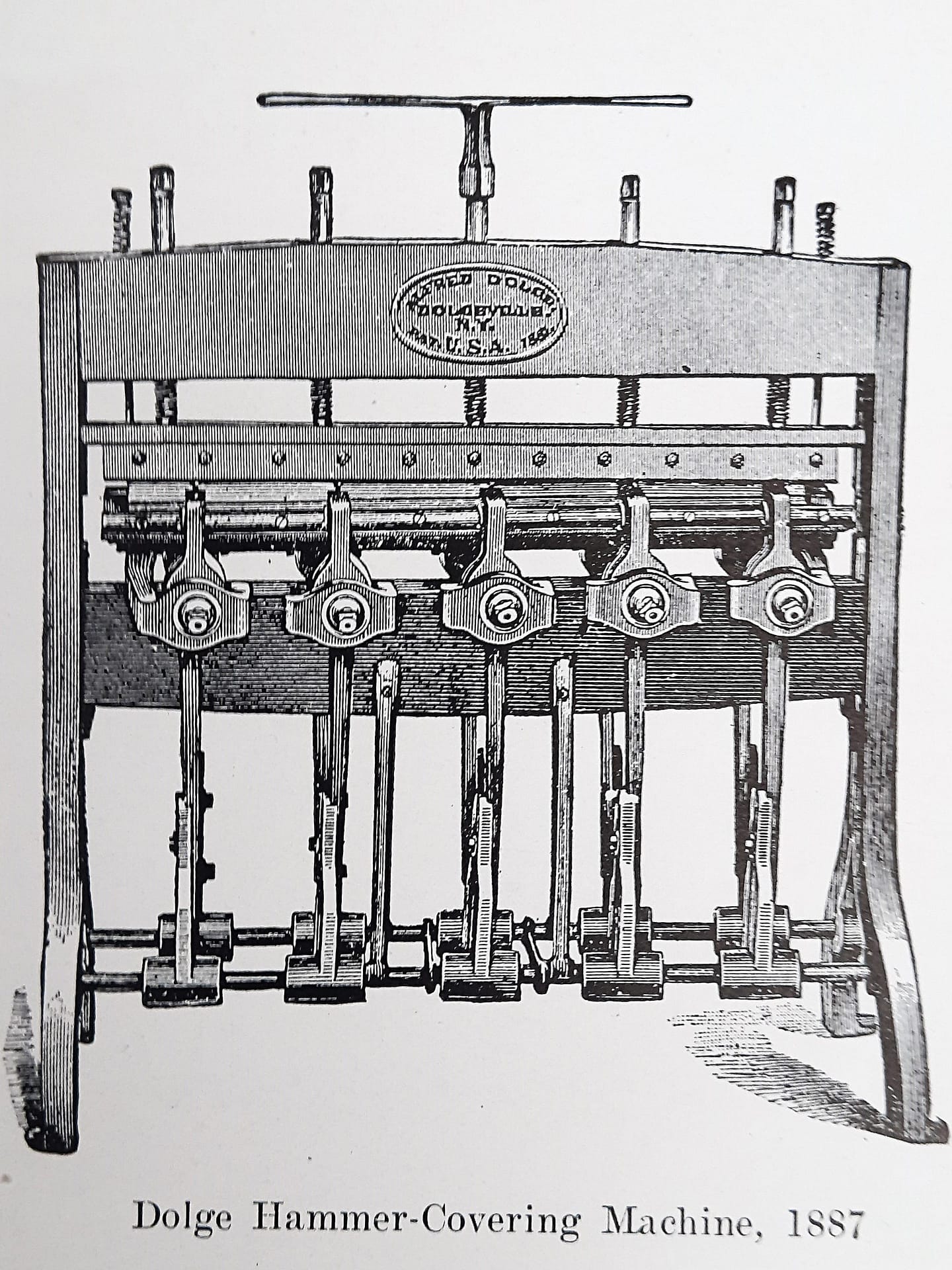
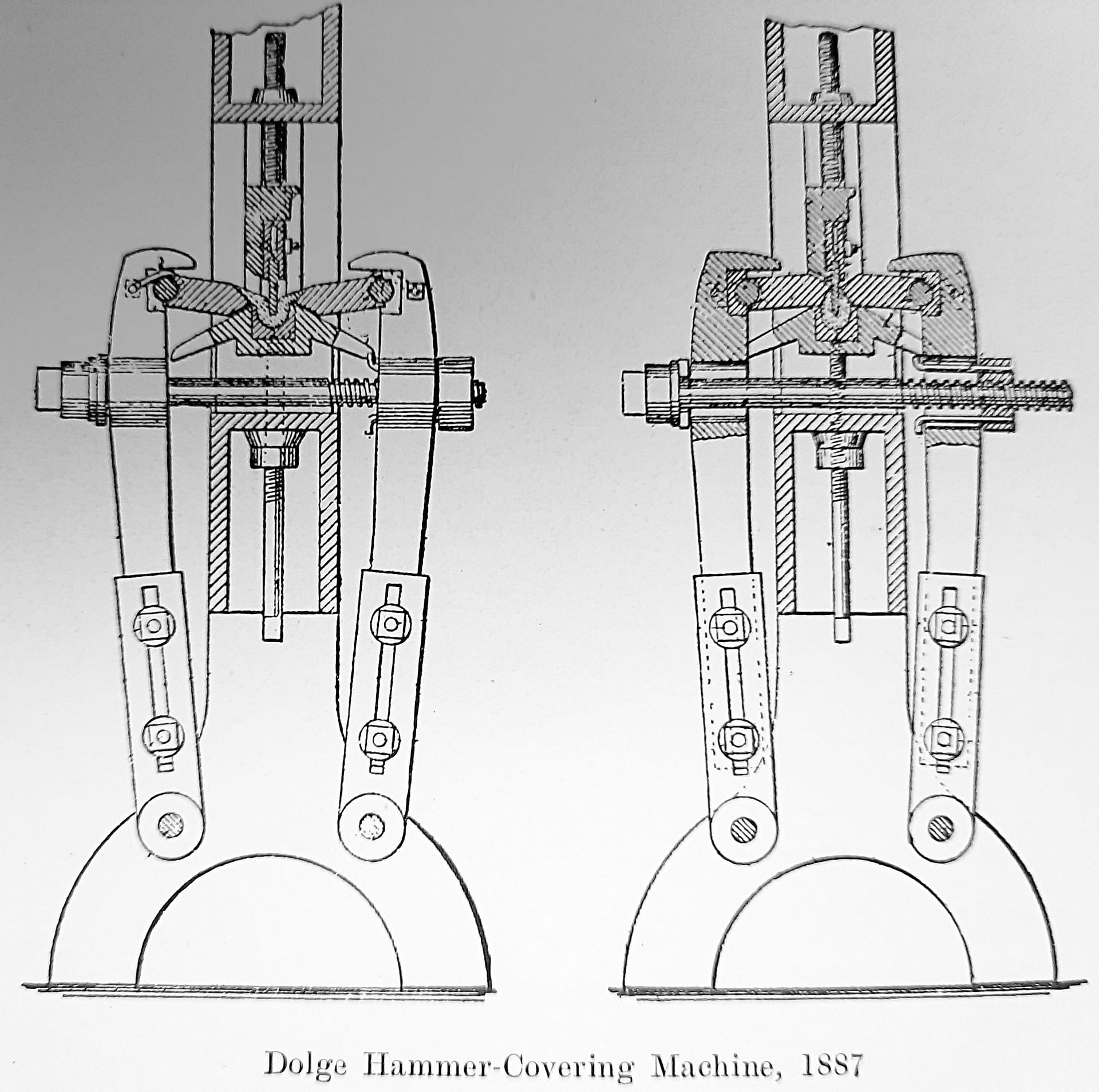
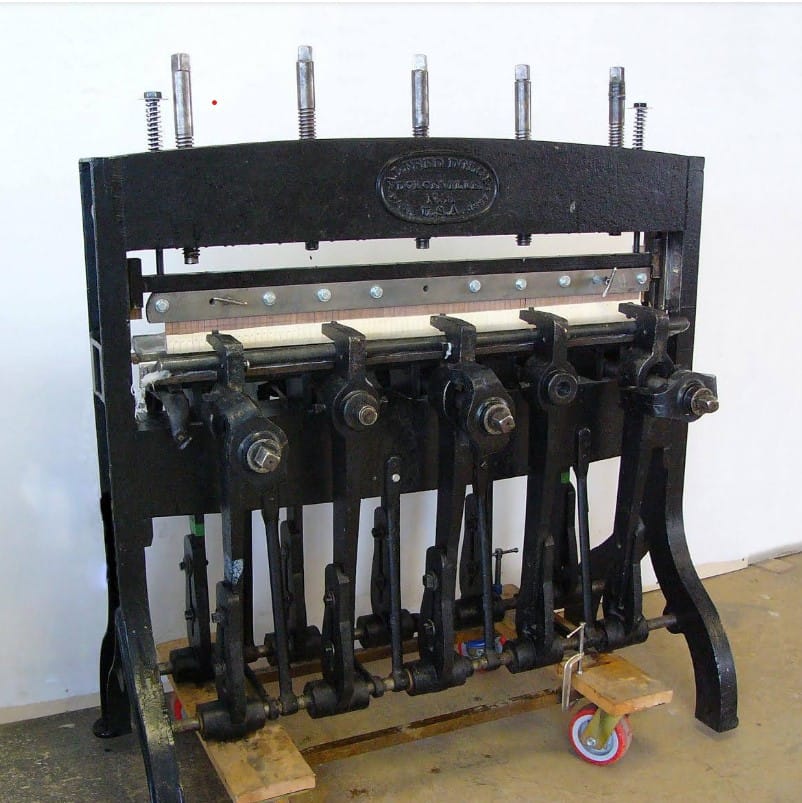
Dolge hammer press, restored. Photo by Serge Harel, facebook.
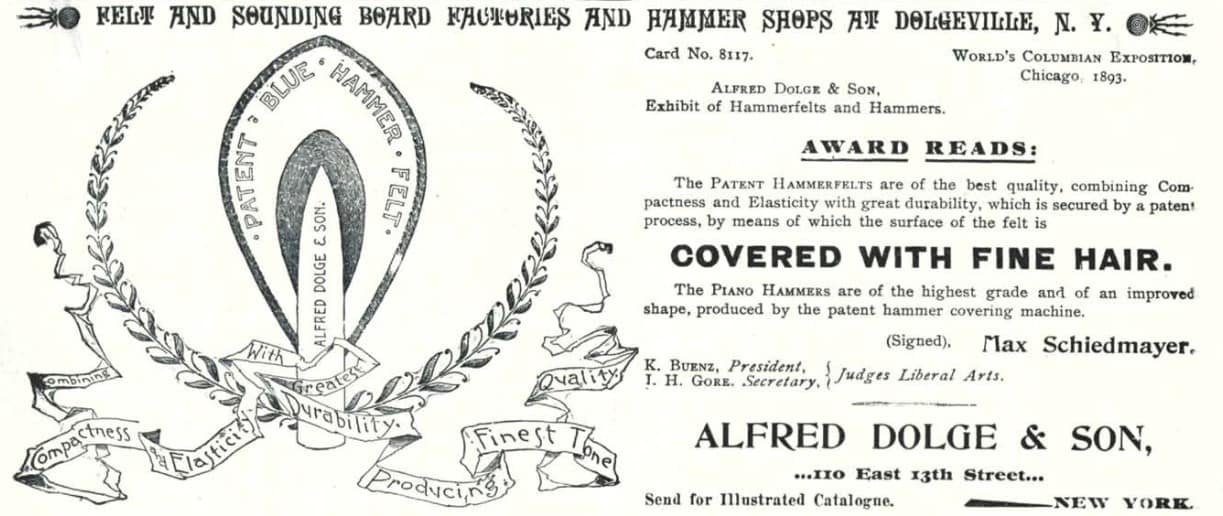
Dolge grand hammer advertisement in Music Trade Review, 22 December, 1895.
Legacy of Alfred Dolge
Alfred Dolge and Son Piano Supply (1869-1898) was acquired by the American Felt Co. in 1899. American Piano Supply Company was established in 1914 as a separate entity from the American Felt Co. (Piano and Organ Department). Hammacher Schlemmer purchased the American Piano Supply Co. in 1927, consolidated its own piano supply house with it, and received future orders from 127-133 Fourth Ave. at the S.E. corner of 4th Ave. and 13th St. The name, American Piano Supply Company, was retained, but not used exclusively; the tools were still stamped with “H. S. and Co., NY.”
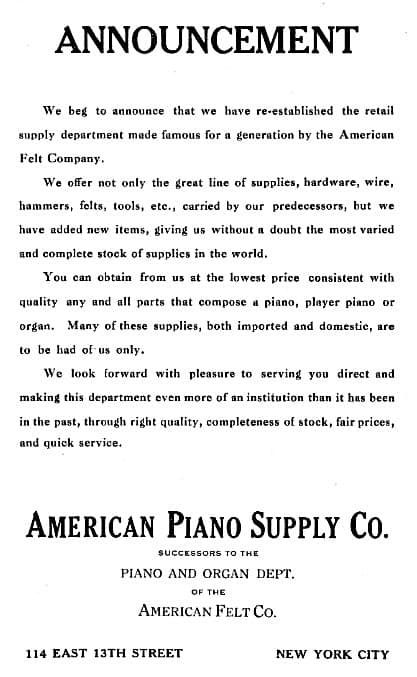
American Piano Supply ((A.P.S.)announces its succession from American Felt Company. From “Tuners’ Magazine,” August, 1914.
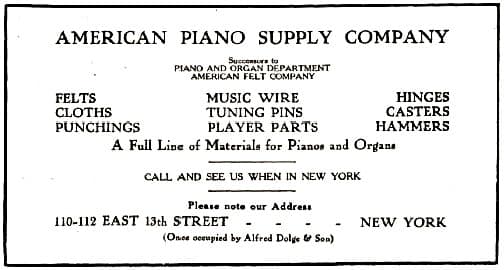
Advertisement, 1916, MTR.

John Schadler bus American Piano Supply (Hammacher Schlemmer) from “The Music Trade Review,” May, 1954.
In 1954, John Schadler Sr. and his two sons, Edward and John Jr., bought the American Piano Supply Division from Hammacher Schlemmer. The Schadler family continued trading with their piano supply business until 2000, when the Schadler family sold their company to Schaff Piano Supply. In around 1992, the Schadler family/APSCO bought out Hale; Tuners Supply Co. based in Somerville MA.
John Schadler Sr. had worked as a clerk for Alfred Dolge’s Piano Supply house in the 1890s.
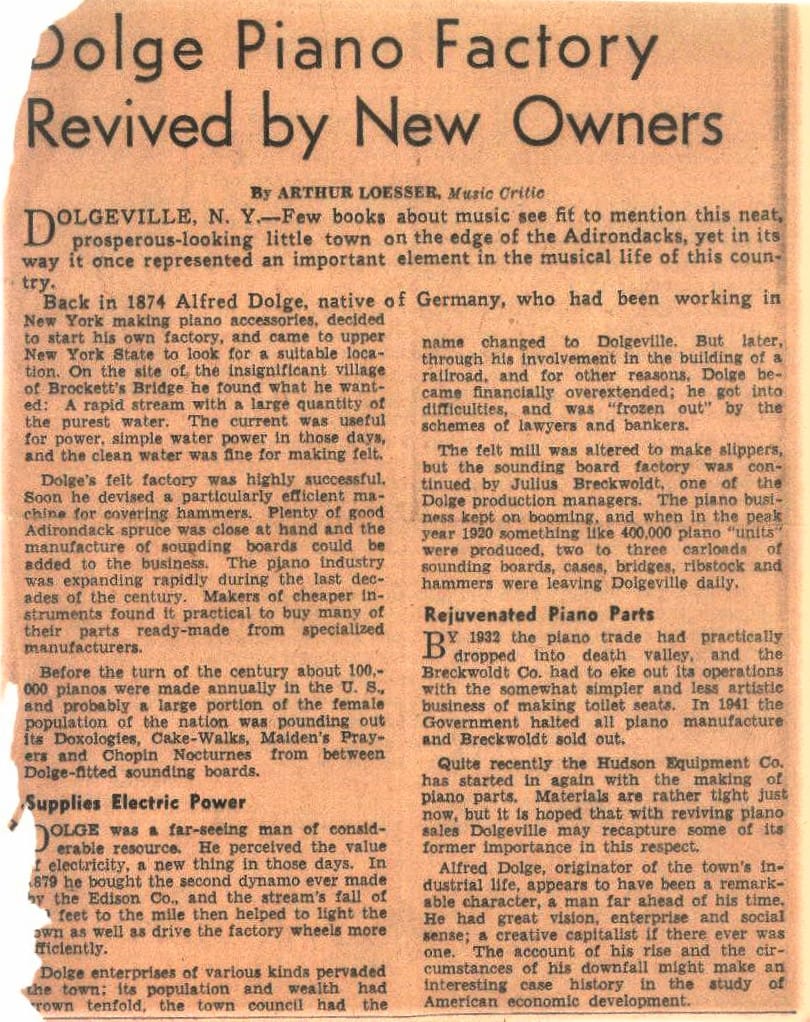
Revival of the the Dolge Piano Factory as North Hudsun Woodcraft. Article by Arthur Loesser, circa 1950. After WWII, the Dolge Piano Factory was revived as the North Hudson Woodcraft Corp. This facility made piano components for another 50 plus years. Steinway & Sons contracted with them for some of their parts. The late Sam Camilleri used North Hudson soundboard panels in his Steinway rebuild projects. Camilleri owned what was considered by many to be the best piano rebuilding shop in New York City during the 1970s and ’80s. By 2002, North Hudson Woodcraft Corp. divested from the piano business. Today, they supply lumber and components for general furniture.
Loesser was a music critic for the Cleveland Press from 1938 to 1956.
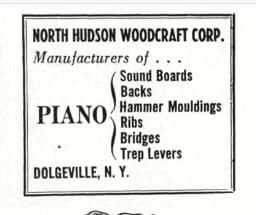
By 2002, North Hudson Woodcraft Corp. divested from the piano business. Today, they supply lumber and components for general furniture.
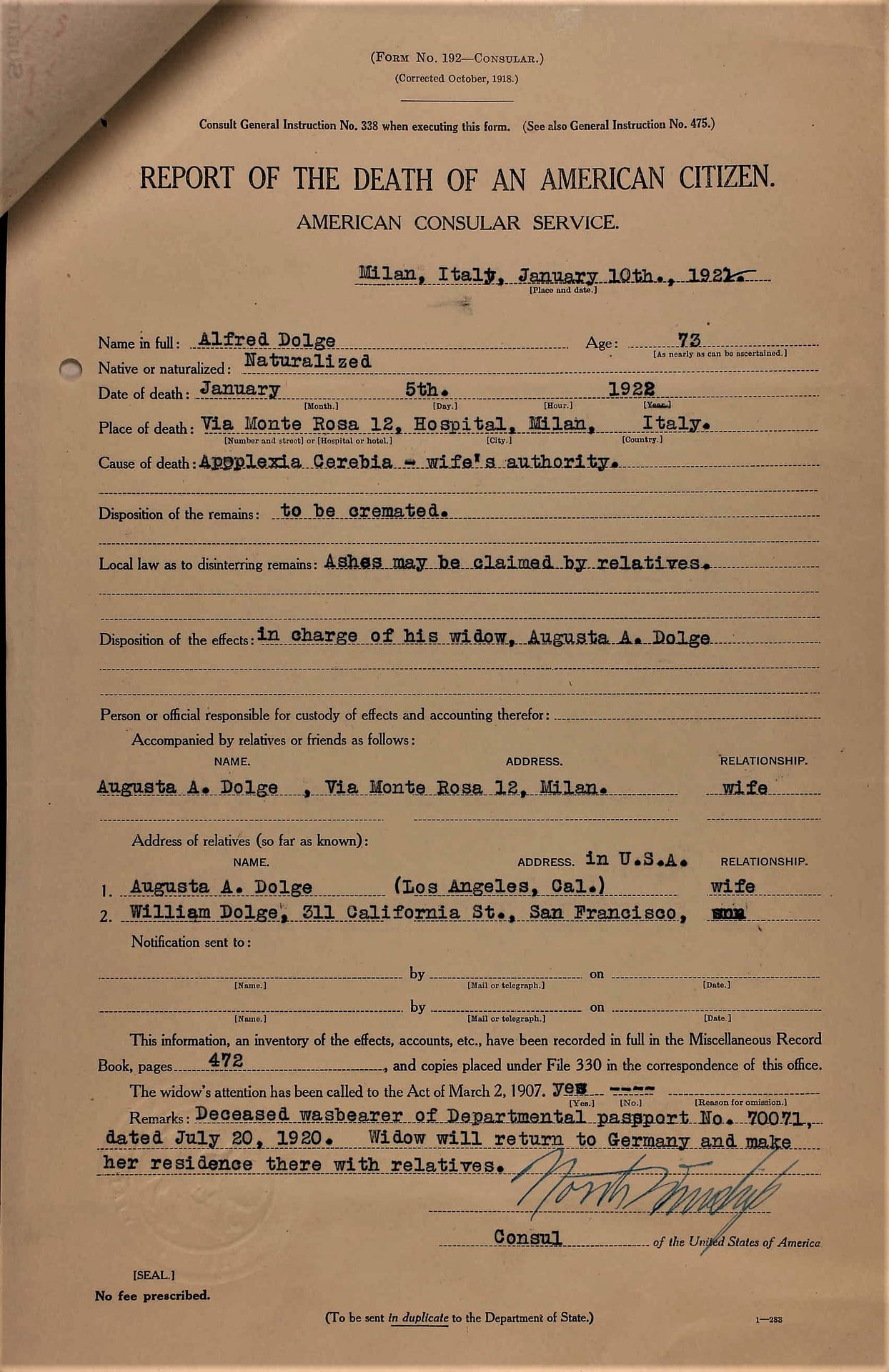
Death of Alfred Dolge, U.S. Consulate in Italy, Milan, Italy, 5 January, 1922.
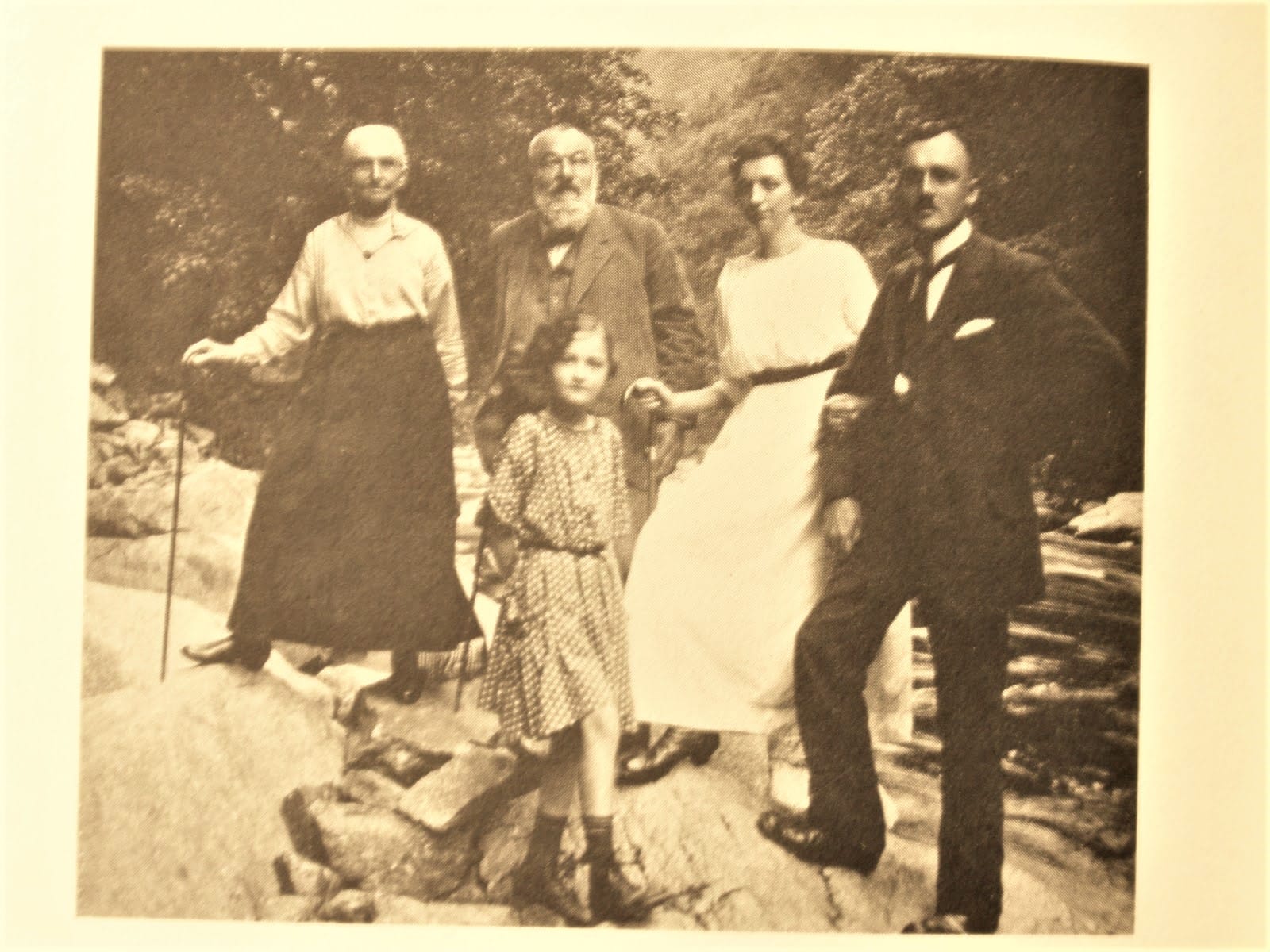
Alfred and Anna Dolge in the Hartz Mountains, Germany, in 1921. Photo from Michael Cooney.
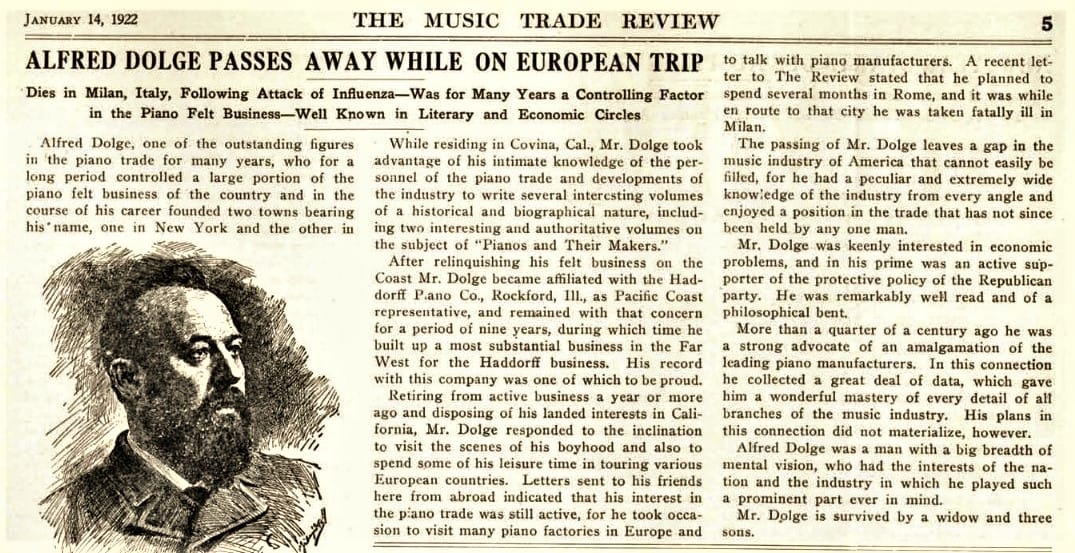
Obituary of Alfred Dolge, “Music Trades Review,” 14 Januayr, 1922.
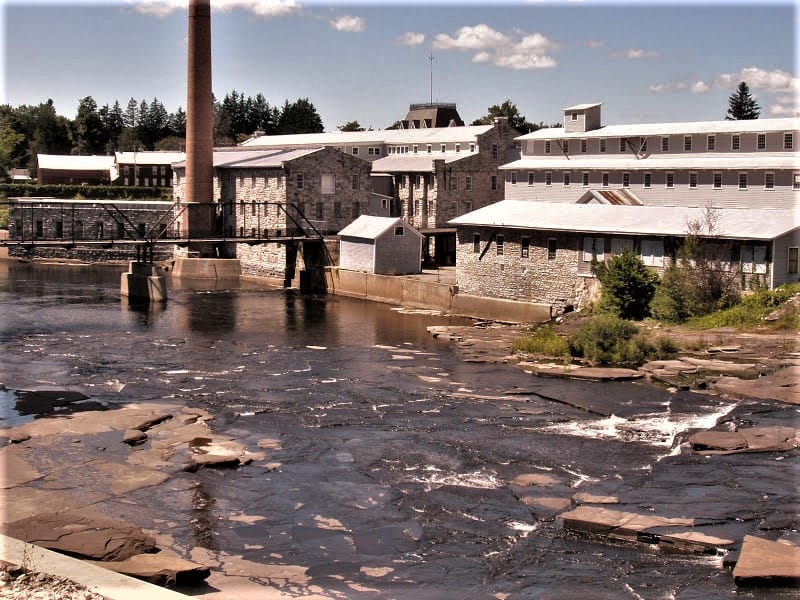
Dolgeville Mills today. Photo from Michael Cooney.
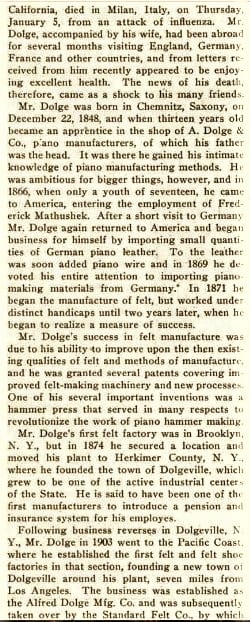
Alfred Dolge Obituary.(first column, cont.)

North American Woodcraft Corporation, advertisement in “The Piano Technicians Journal,” April, 1988.
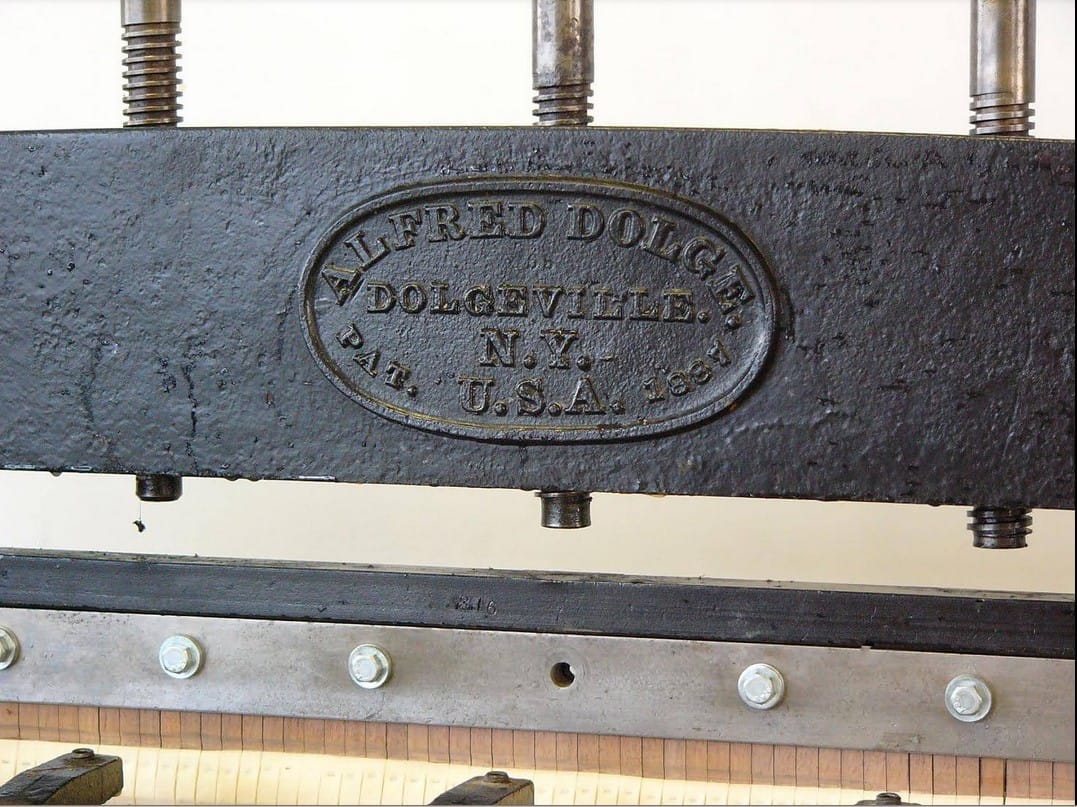
Dolge hammer press, name stamp. Photo by Serge Harel, facebook.