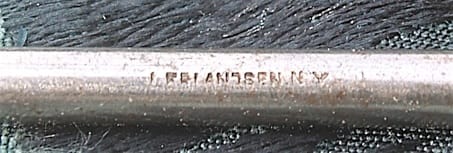
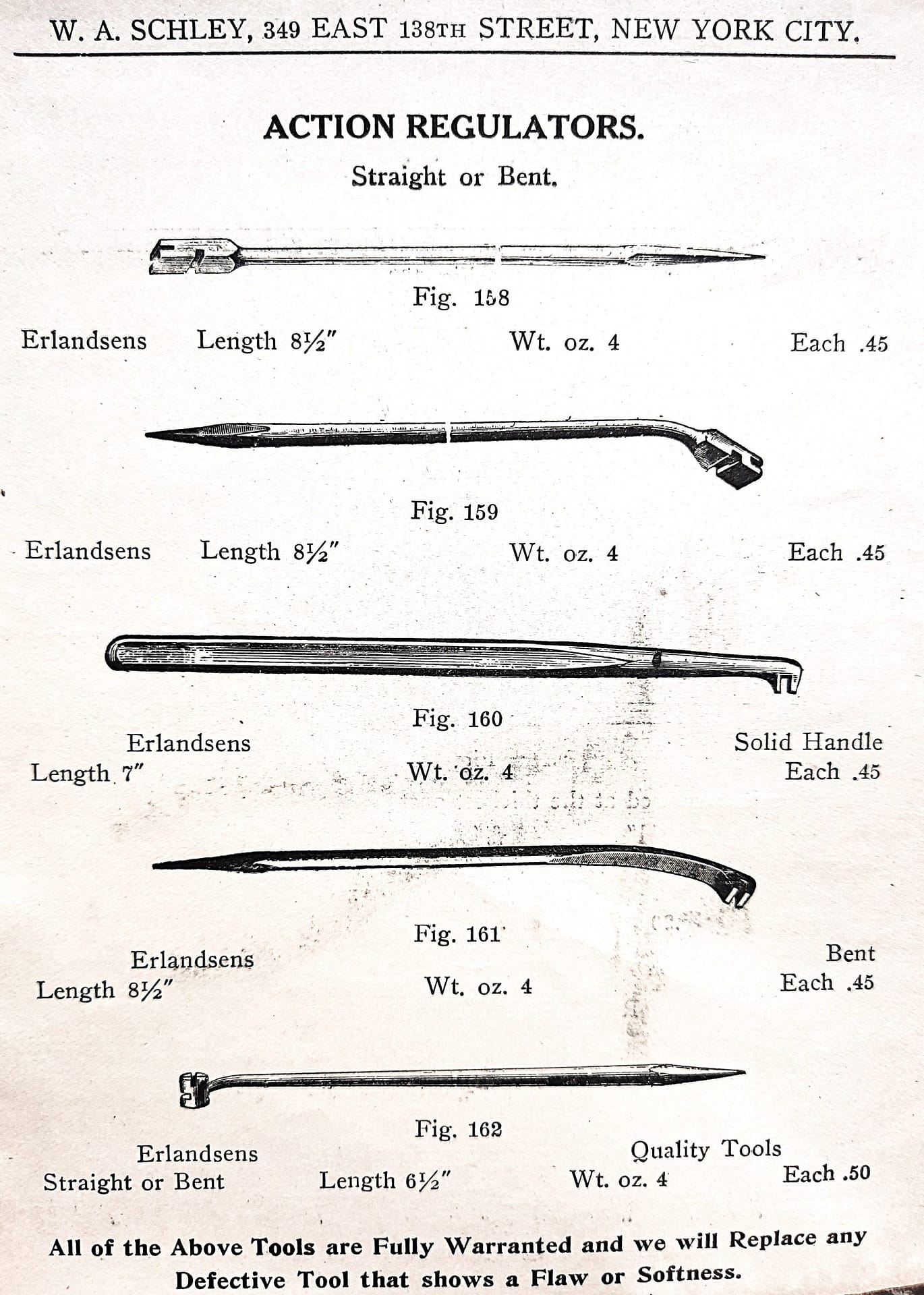
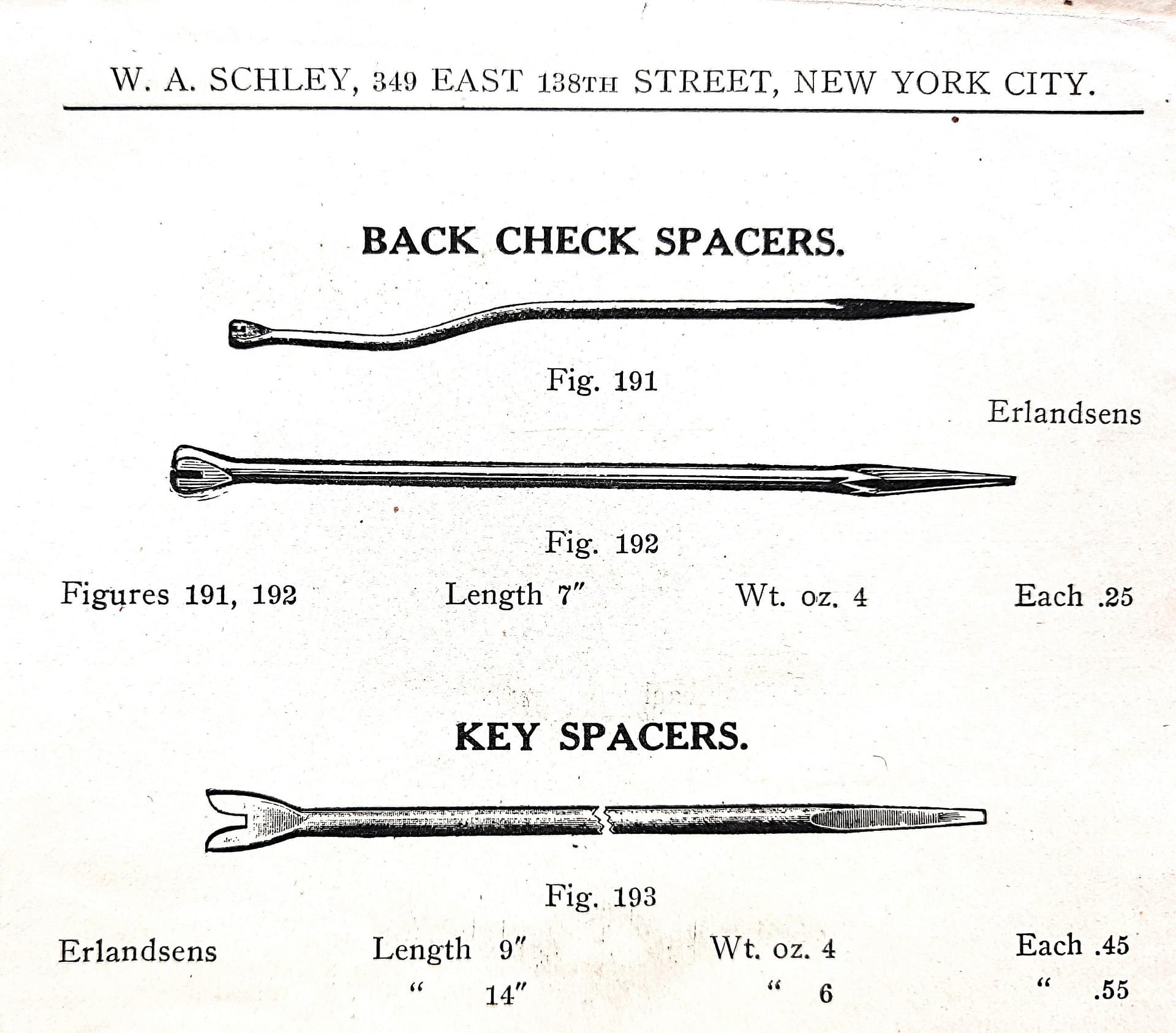
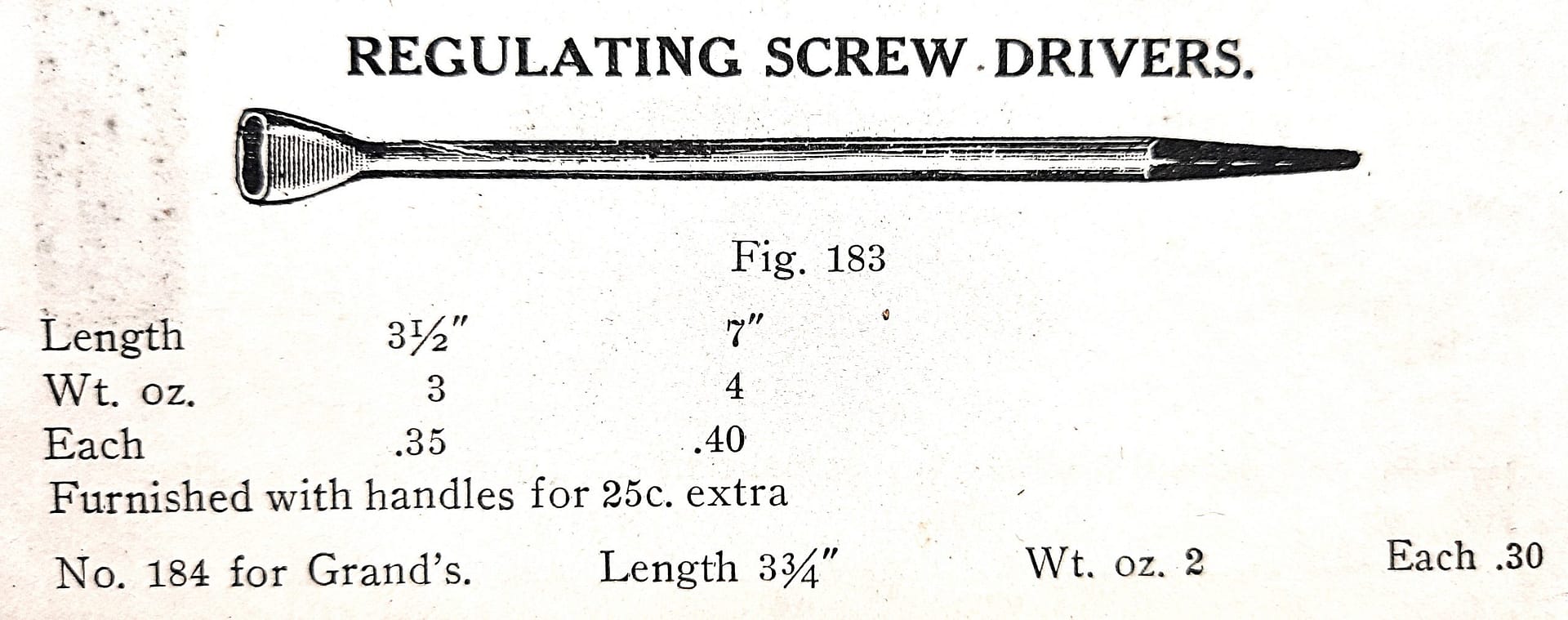
Napoleon Erlandsen and his son, Julius, are well recognized by tool collectors and trade historians for their hand planes and bow drills, but it is not as well known that they manufactured many of the more specialized tools for servicing and manufacturing pianos. These tools were commonly rebadged as Hammacher Schlemmer piano tools.
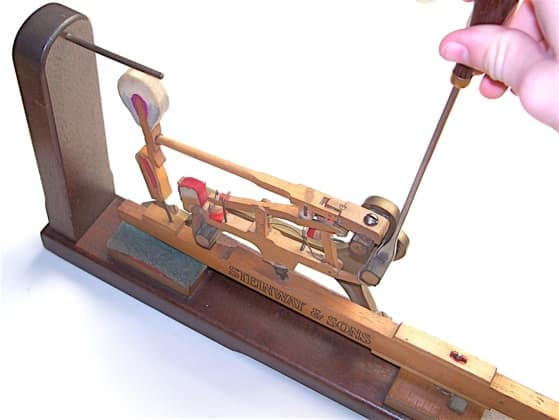
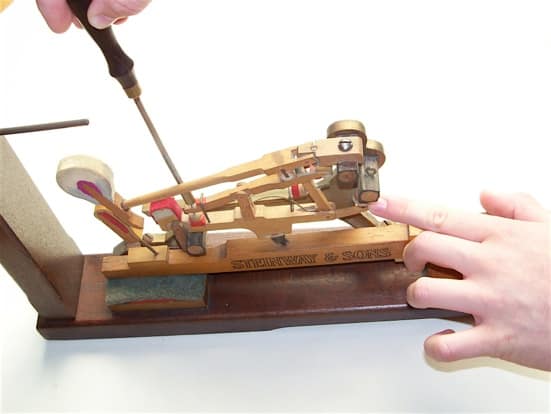
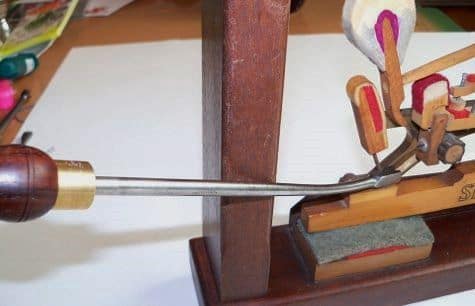
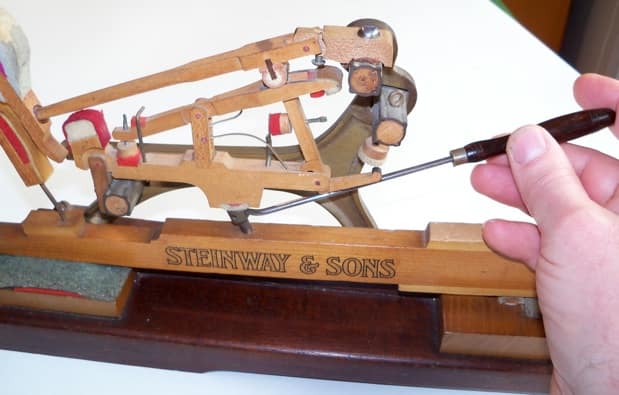
My son, Jeremy Shepherd with let-off regulating tool on escapement eyelet screw of 1953 Steinway action model, c. 2009.
Driver placed on the “let off”, or escapement adjustment eyelet screw on a vintage Steinway grand action model. This action model is #37 in a series of 100, made in 1953, to celebrate Steinway and Son’s Centenary. This belonged to my late business partner, and I received the model along with his workbench and vintage tools in 1986. The damper action is not included in the Centenary model.
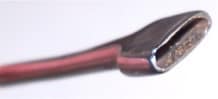
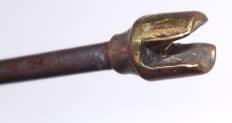
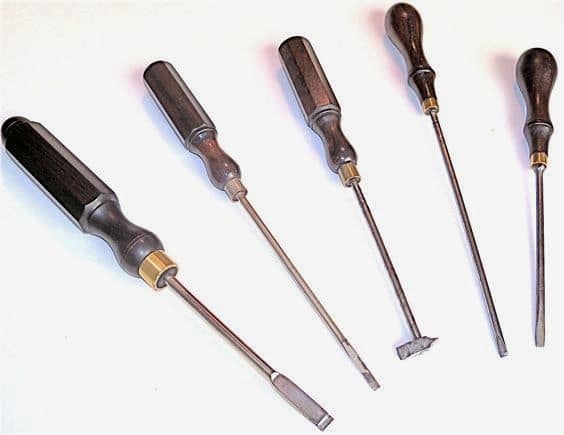
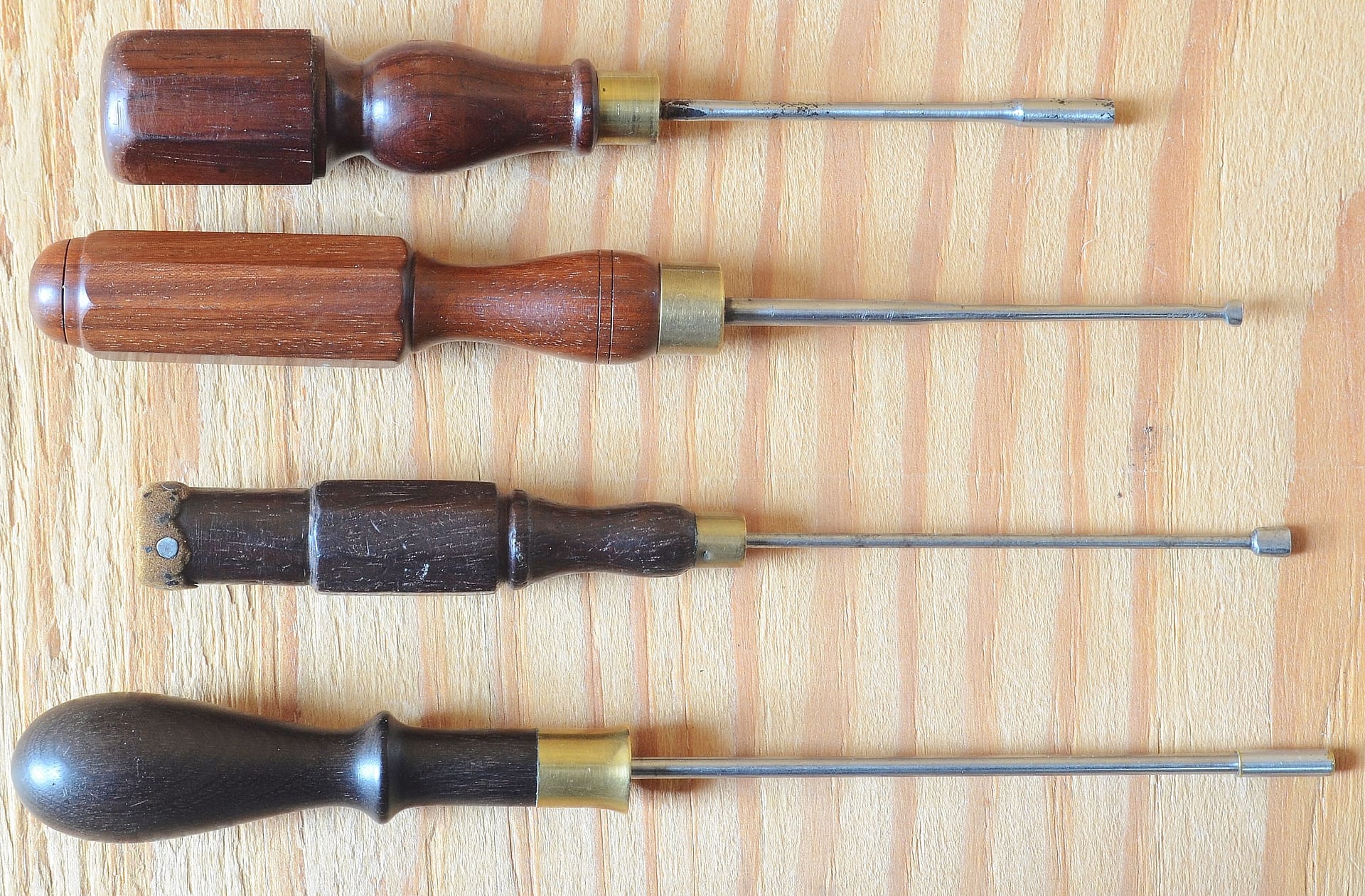
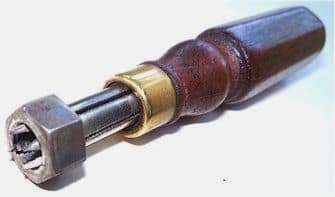
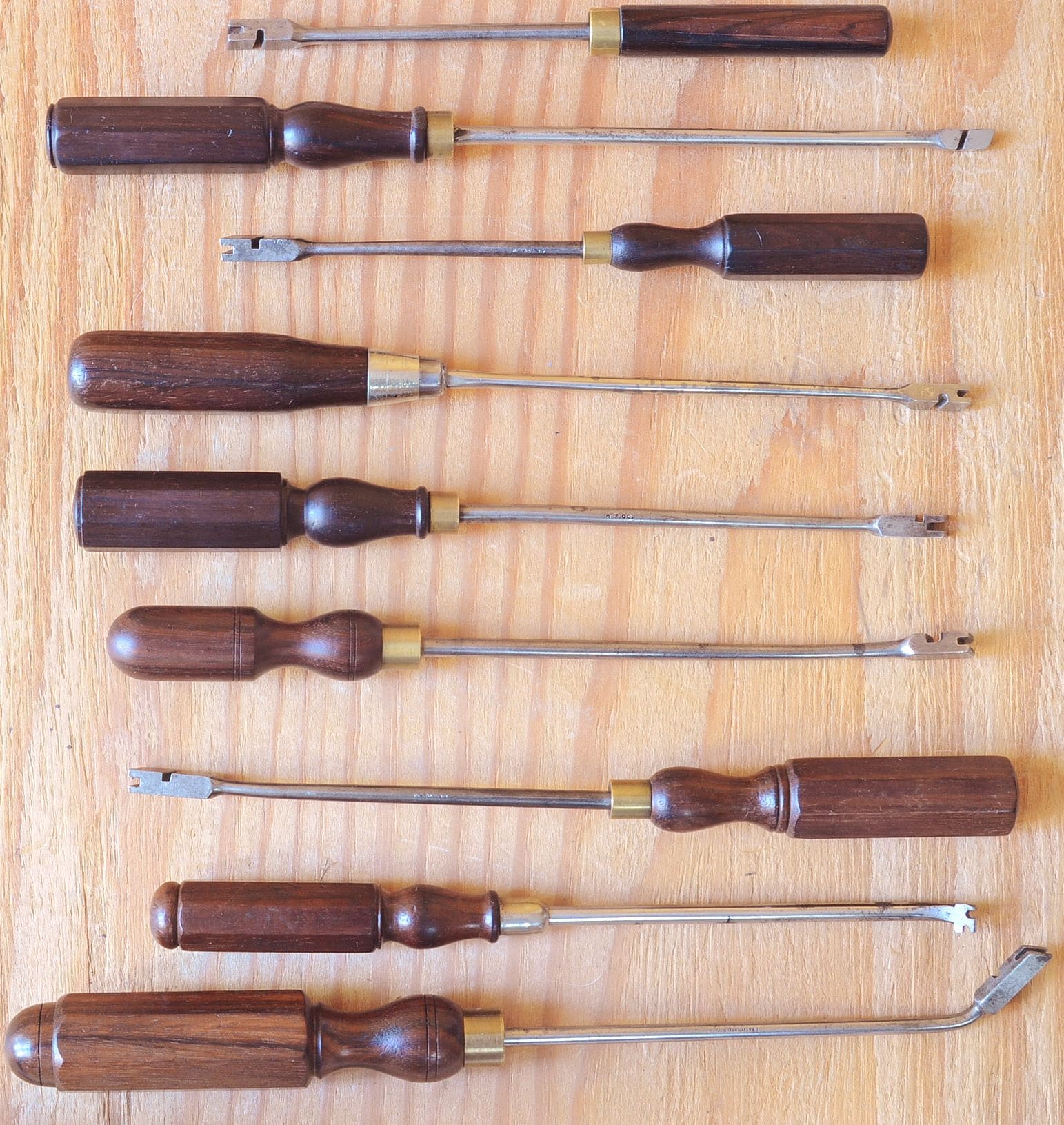
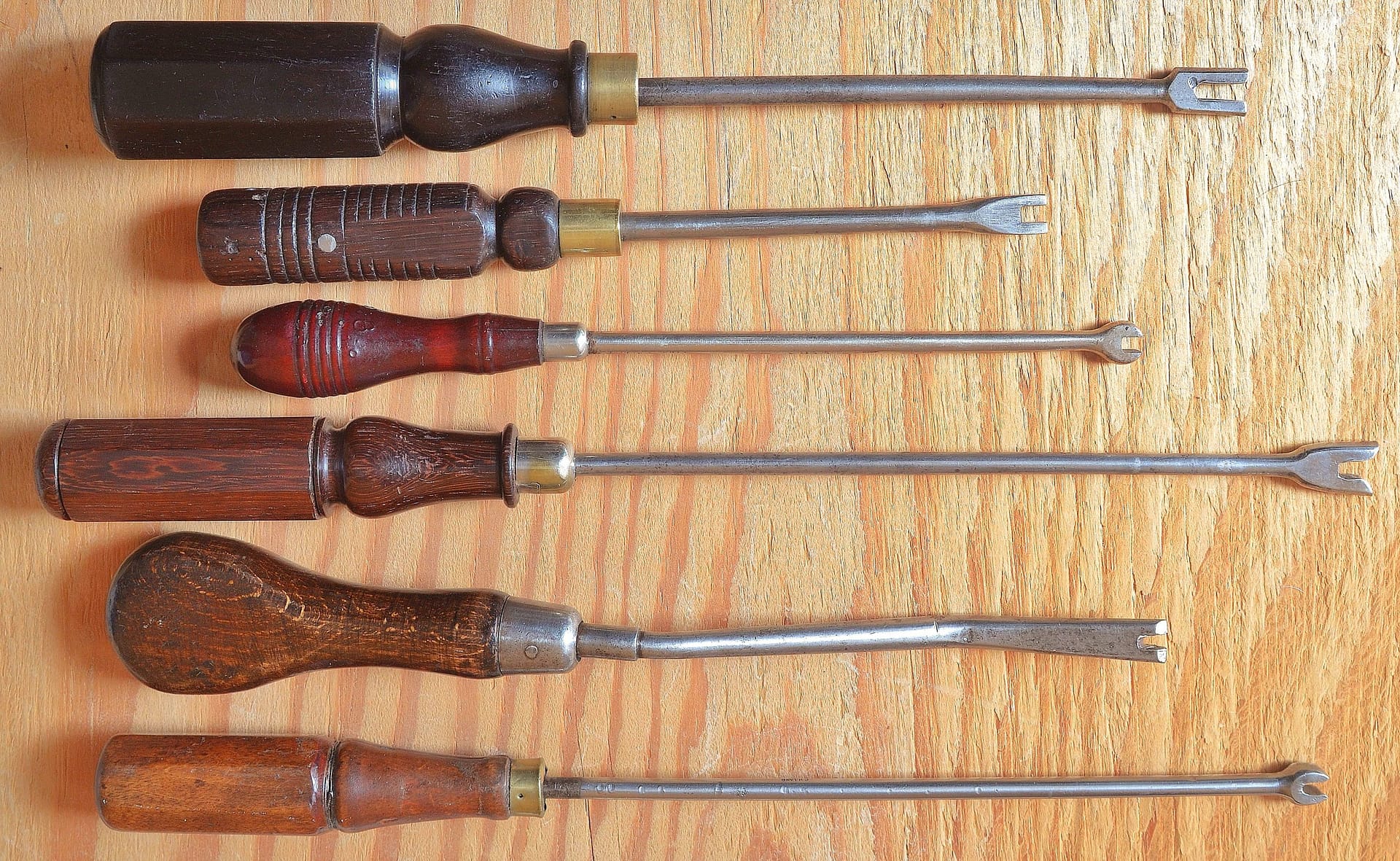
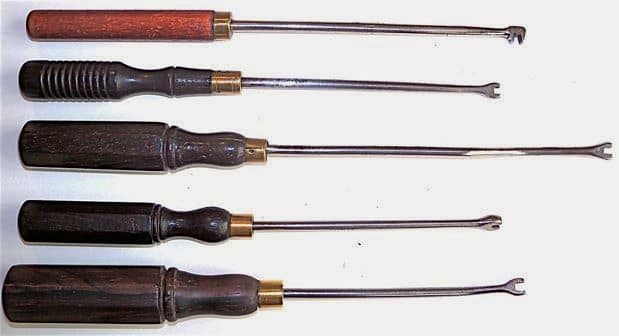
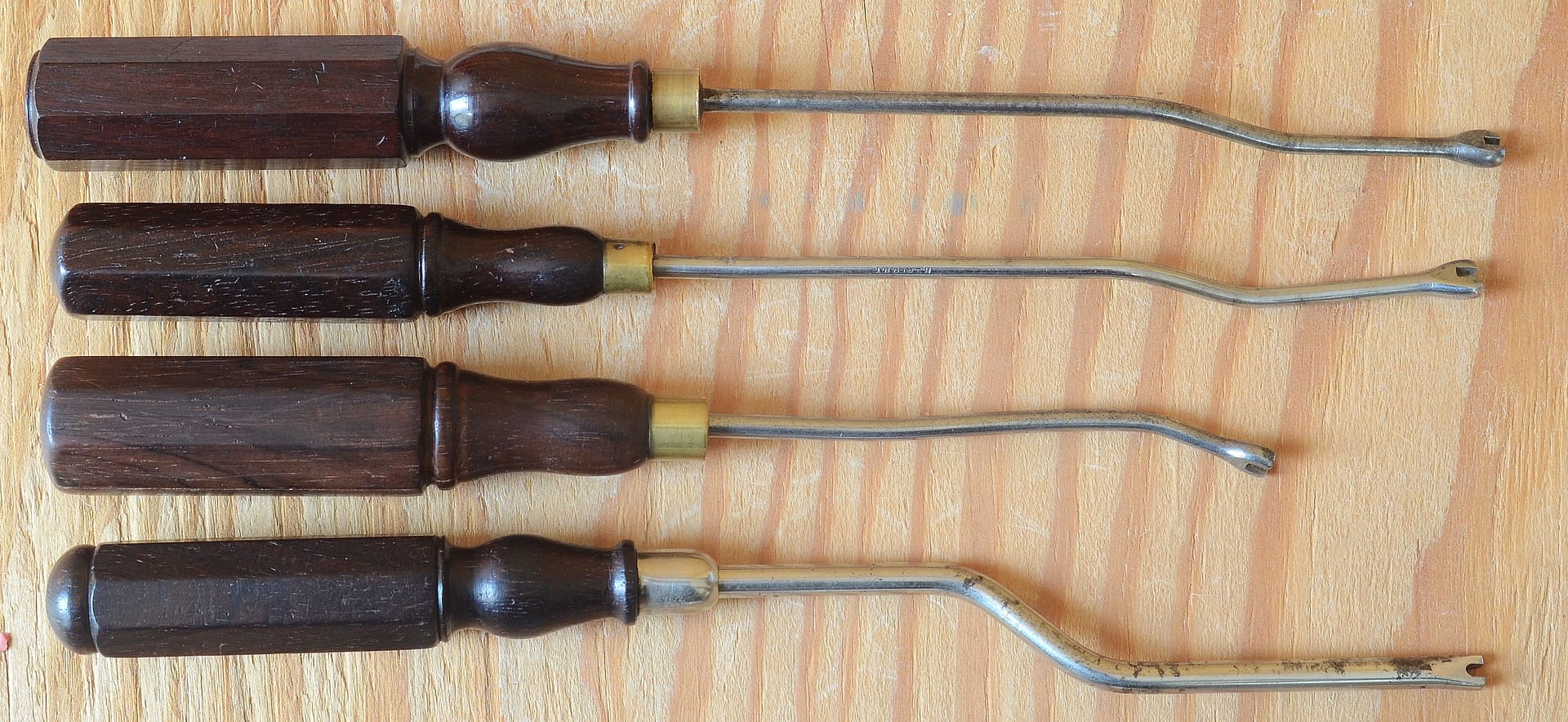
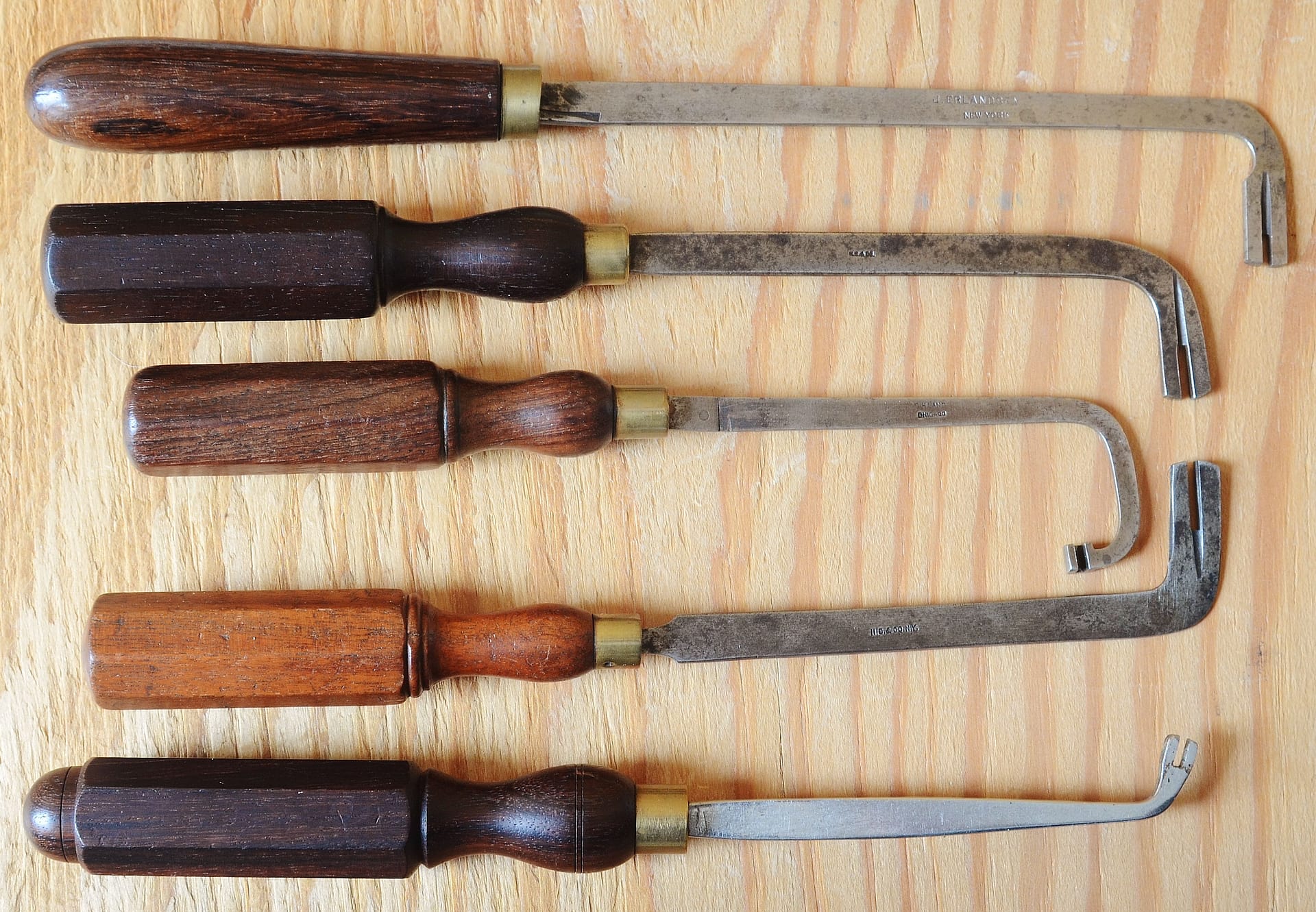
Various let off screwdrivers: Top to bottom: Hammacher Schlemmer and Co., New York, top three; C. H. Lang, Chicago; Hale, Boston; The remainder, below, are unmarked. Part of the charm of these old tools is their handles, which are mostly rosewood, with attractive turnings. These handles represent a wide variety of user preferences. A discussion of handle matching can be found on the Combination Handles page. The socket greatly affects the way these let-off tools perform, and with these antiques, there is considerable variation.
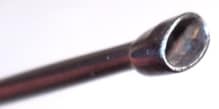
Very narrow opening; tool must be used straight up and down or regulation eyelet will be bent or broken off!
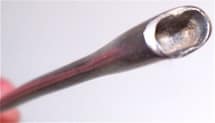
Very old 19th century driver, shown at the bottom of in the large photo above, revealing wear in socket.
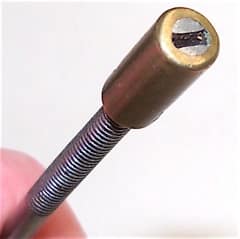
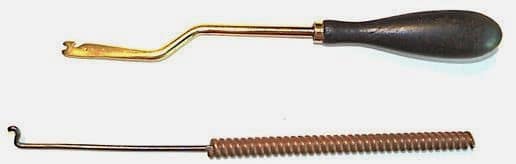
Most tuners improvised some of their tools (just like today). Both of these tools used a screw as their basis: a slotted drop screw adjuster, and a short let off tool that is simply a screw with a deepened slot that allowed for use at various angles.
These two home made tools were found within the antique tool store at Jonesport, Maine, during August, 1979.
Most tuners improvised some of their tools (just like today). Both of these tools used a screw as their basis: a slotted drop screw adjuster, and a short let off tool that is simply a screw with a deepened slot that allowed for use at various angles. These two home made tools were found within the antique tool store at Jonesport, Maine, during August, 1979.
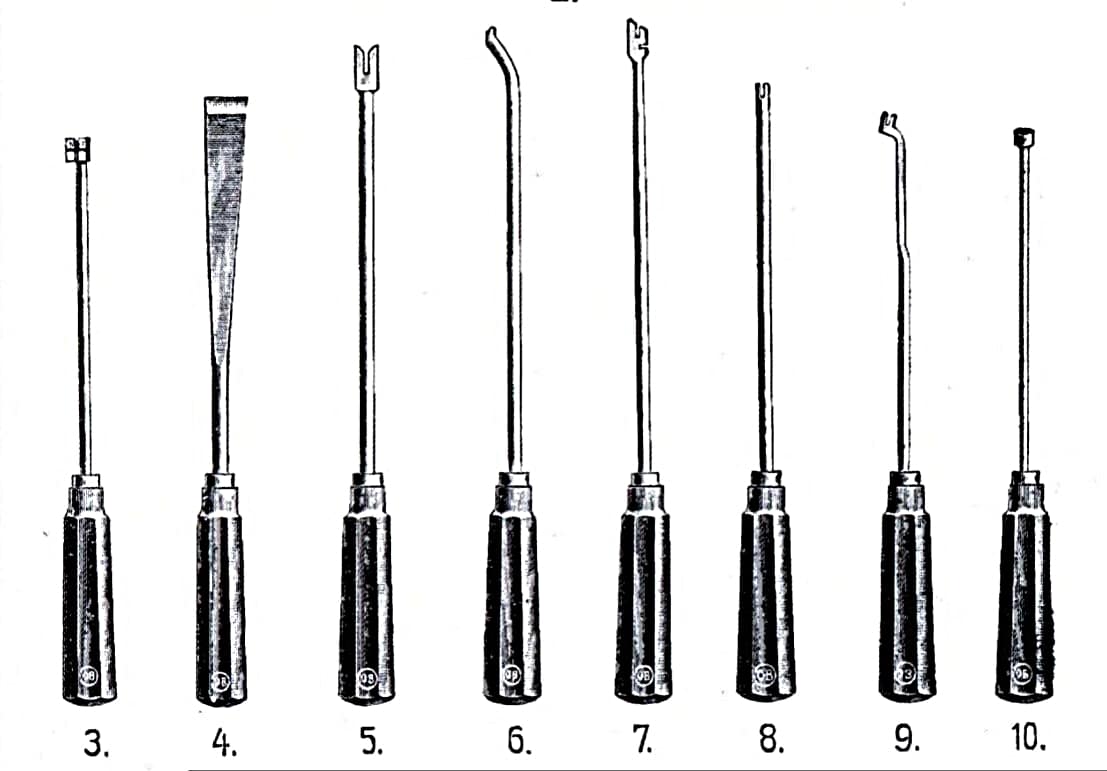
Partial set of Piano Action Regulating Tools, in the European style, as offered in Otto Bergmann, Berlin Tool Catalogue, 1927. 3. Damper regulator with cross-cut; 4. Flange spacing tool; 5. Key spacer; 6. Damper regulating tool for Overdamper action (know as “birdcage” in North America); 7.Action wire bender; 8. Damper wire regulator with one cut; 9. Upright Spoon regulating tool; 10. Let-off regulating to
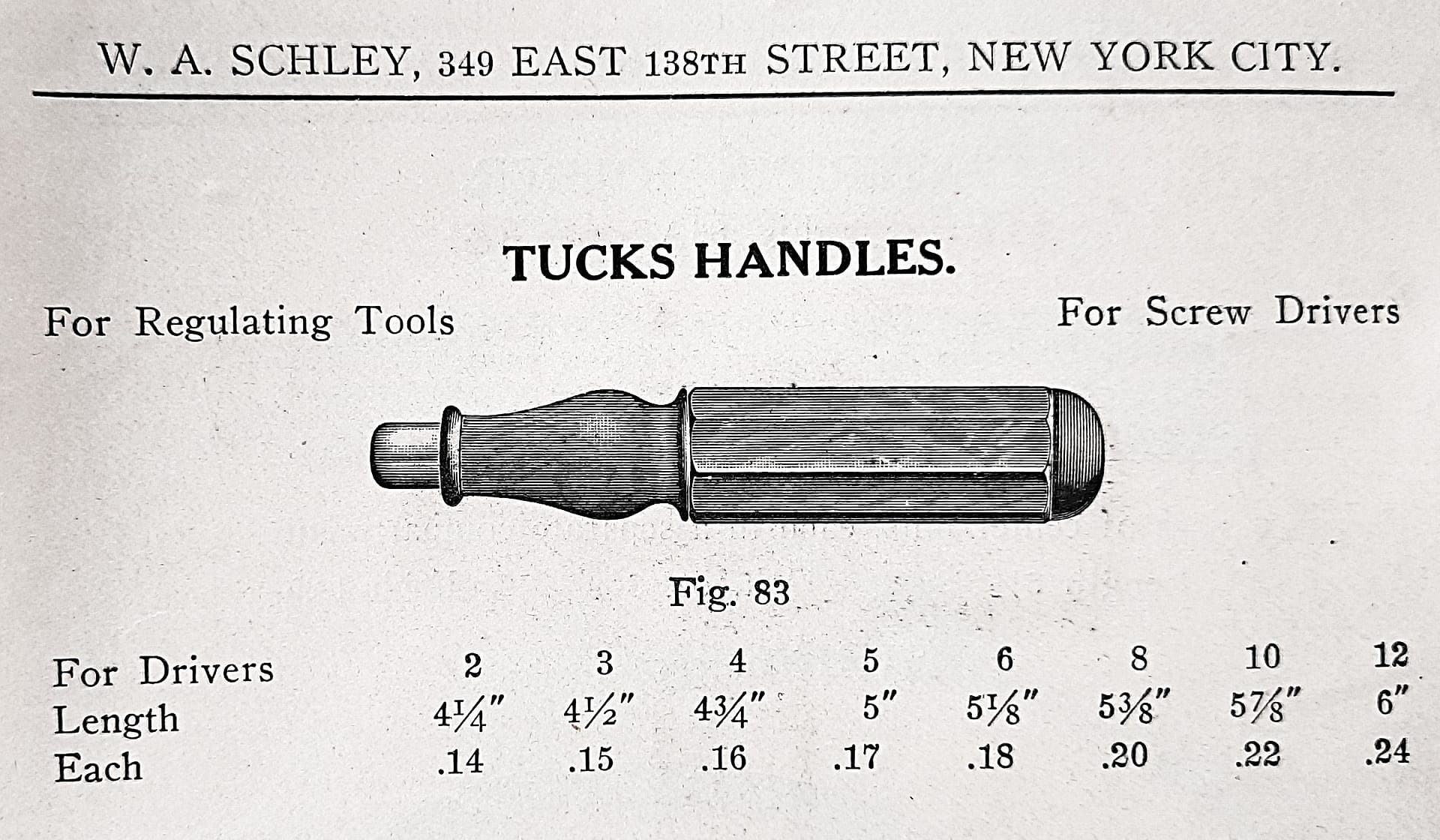
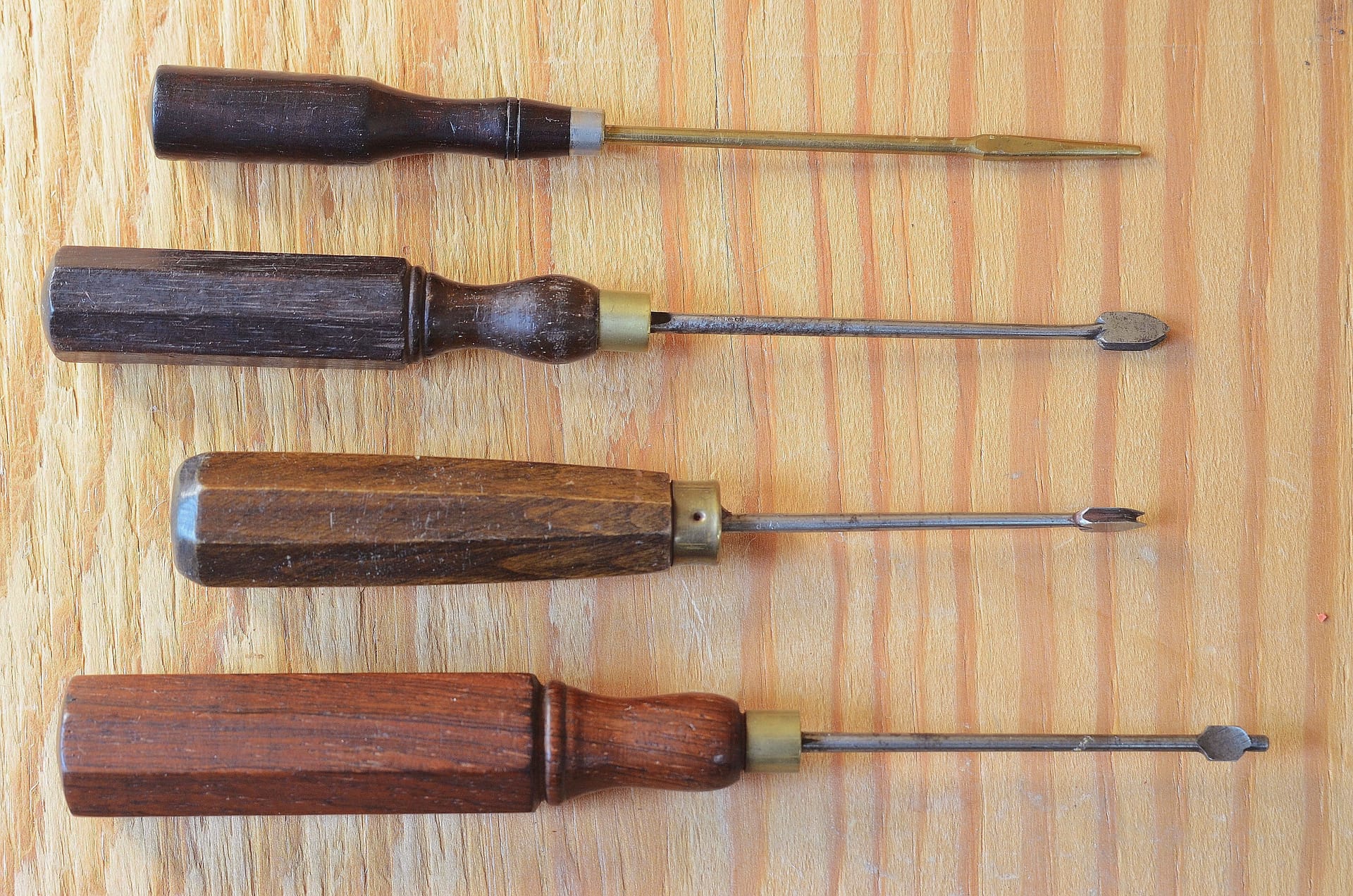
Screwdrivers found in piano kits. An advantage of having individual handles for these tools is that the size and shape of the handle can be chosen for a particular function or intended use, not unlike the mating of an appropriately sized handle for a particular chisel. Individual preference also entered into this.
Top to bottom: hollow ground screwdriver with large ebony London pattern handle; piano action screwdriver with rosewood Tuck handle; two narrow action screwdrivers. short screwdriver; two offset screwdrivers, for hard to access places, and antique rocker actions.
Balancier height adjustment screw. Thanks to my son Jeremy Shepherd (c.2009) for the extra pair of hands in these demonstrations.
Impeccable quality on these antique grand drop screw regulating tool. When it comes to the ‘old times,’ do not believe the naysayers.
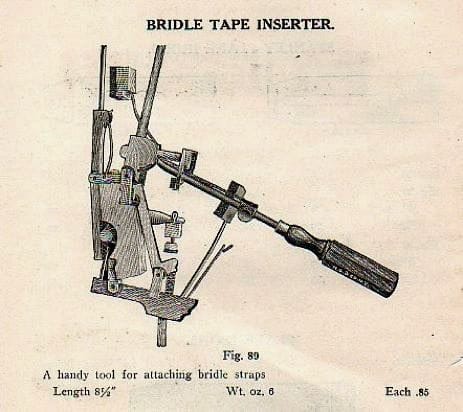
Although not action regulation, installing bridle tapes in old uprights was a frequent job for many years. Before WWII, installing bridal tapes was done by tacking them to the hammer butt, rather than using a cork attached into the hole of the butt catcher, which was patented on June 15th 1920, and widely practiced by the 1930s. Bridal tack inserter with full package of bridal tacks.
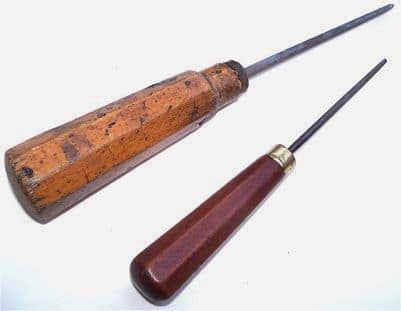
Examples of two tapered octagonal handles, which is an older handle shape, going back to the 17th and 18th centuries. Ferrules were added later, in the 19th century, and these were often used for chisels. At the top of the photo is a reamer, slightly larger reamers are used for reaming the bored holes in the grand hammer moulding, to refine the fit of the shank in the hammer moulding before gluing and hanging. The small tool with a rosewood handle is a small rat tail file that was found in a piano kit, probably used to slightly enlarge the balance holes in keys where the balance rail pins were binding.
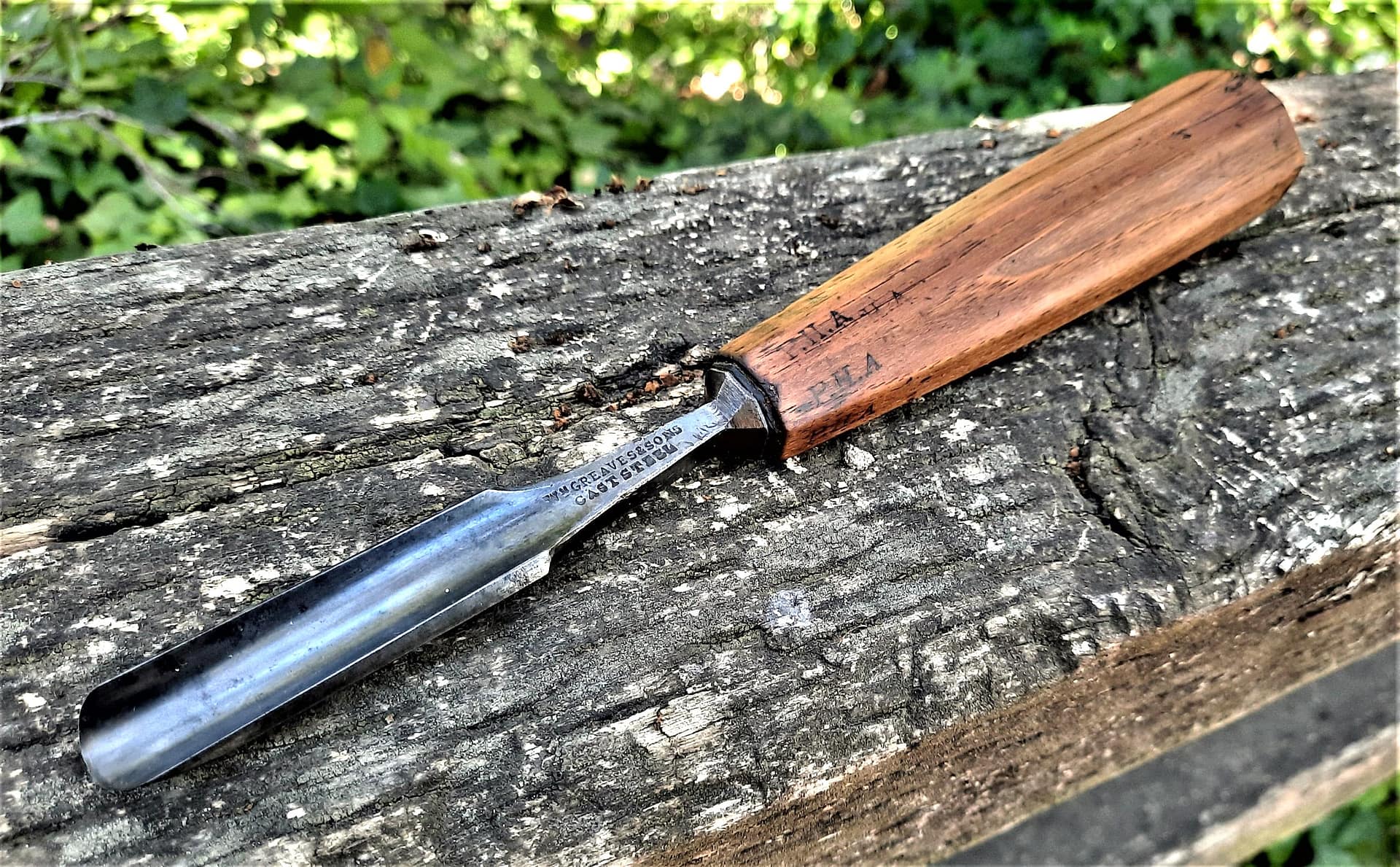
William Greaves, Sheffield “Sheafworks” cast steel gouge, in the 18th century style. This Wm. Greaves gouge was probably made in the 1820s, but was done in the 18th century practice, with an octagonal bolster, and matching facets on the tapered octagonal hickory handle which was very likely original. The wood of the handle would be fitted to the back of the bolster, which, in those days was not always flat. I doubt that the leather washer would have been necessary in this case. A bolster was needed to protect the handle from splitting when tapped with a mallet. Before 1840, circular pipe stock was not readily available, so the large bolster was the solution. The bolster was slipped over the tang hot, and once cool, was permanently fastened in place.
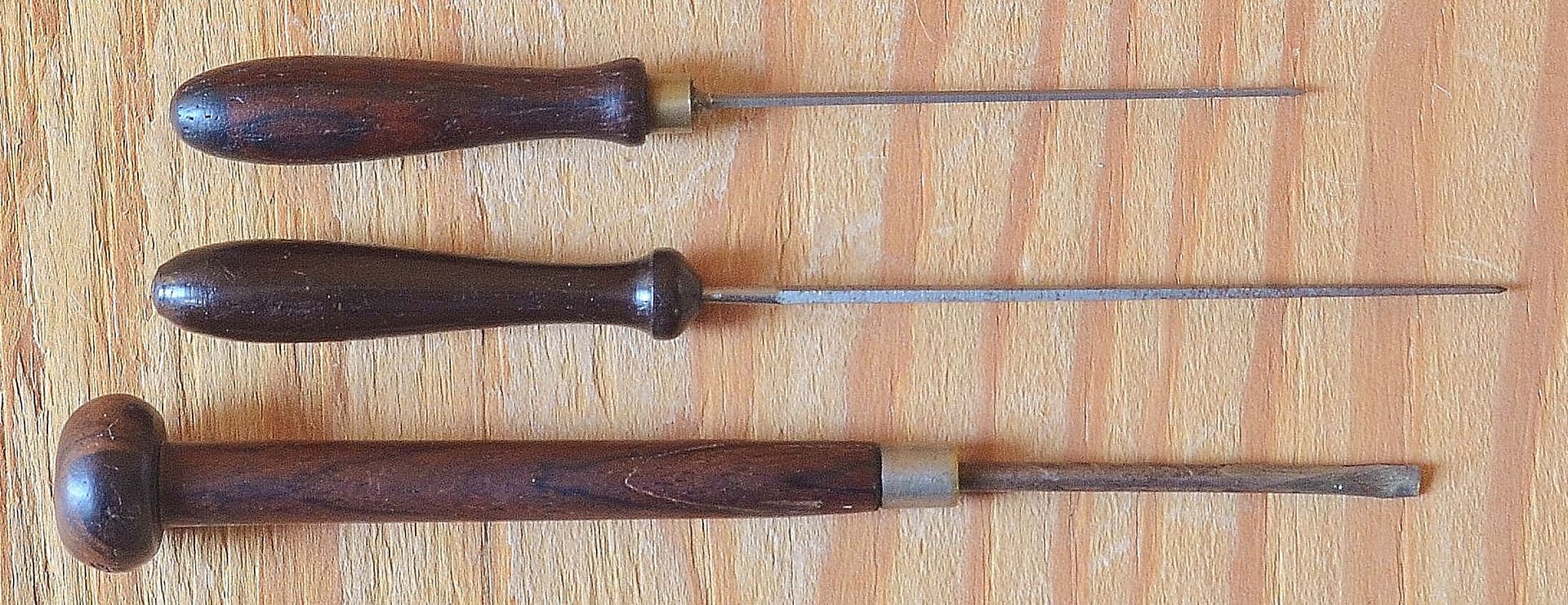
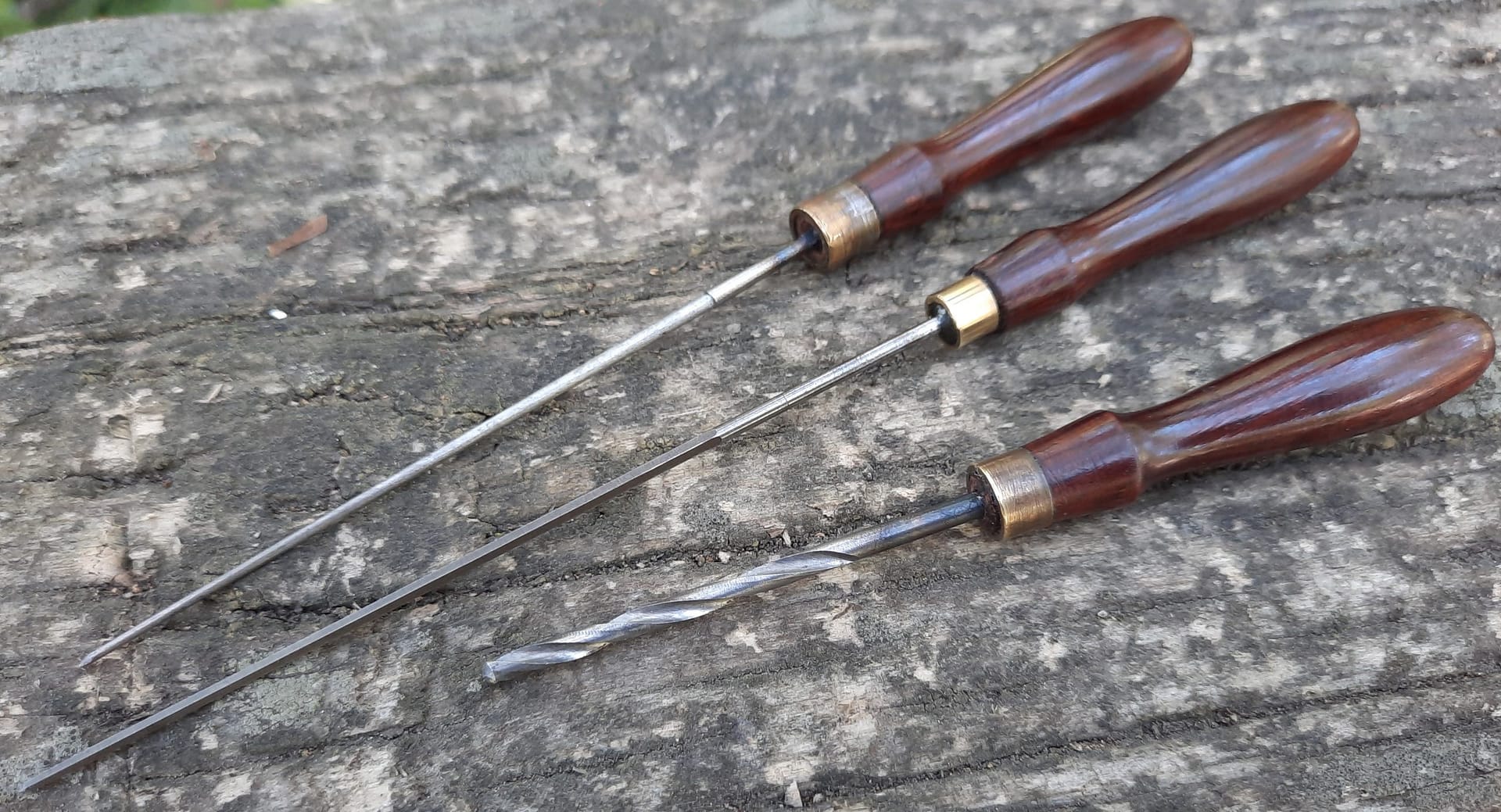
Action center fitting tools, rosewood handles, pre-1910. Drill, for removing cloth bushing, reamer, for fitting center pin, and burnisher, a somewhat overlooked tool.
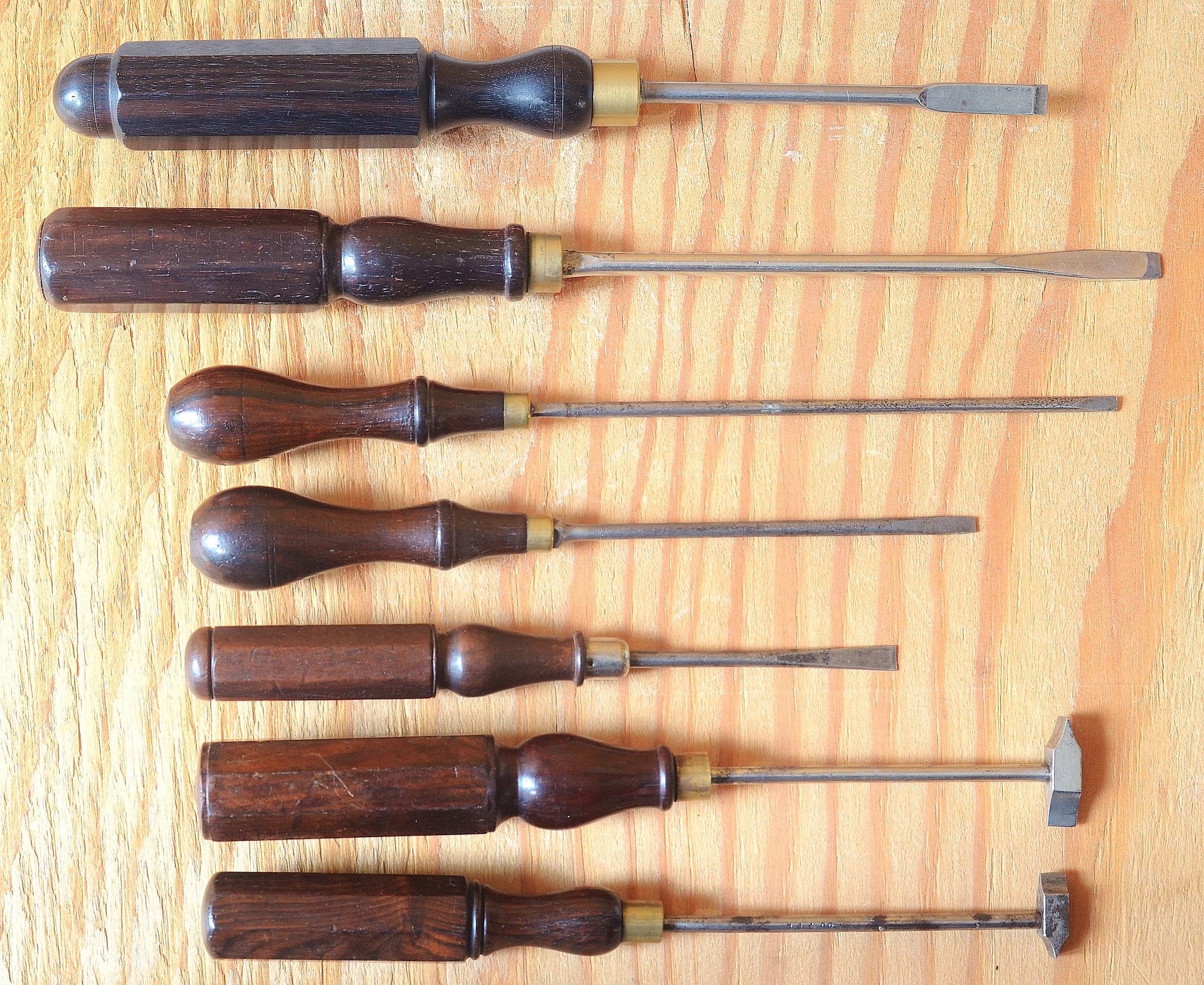
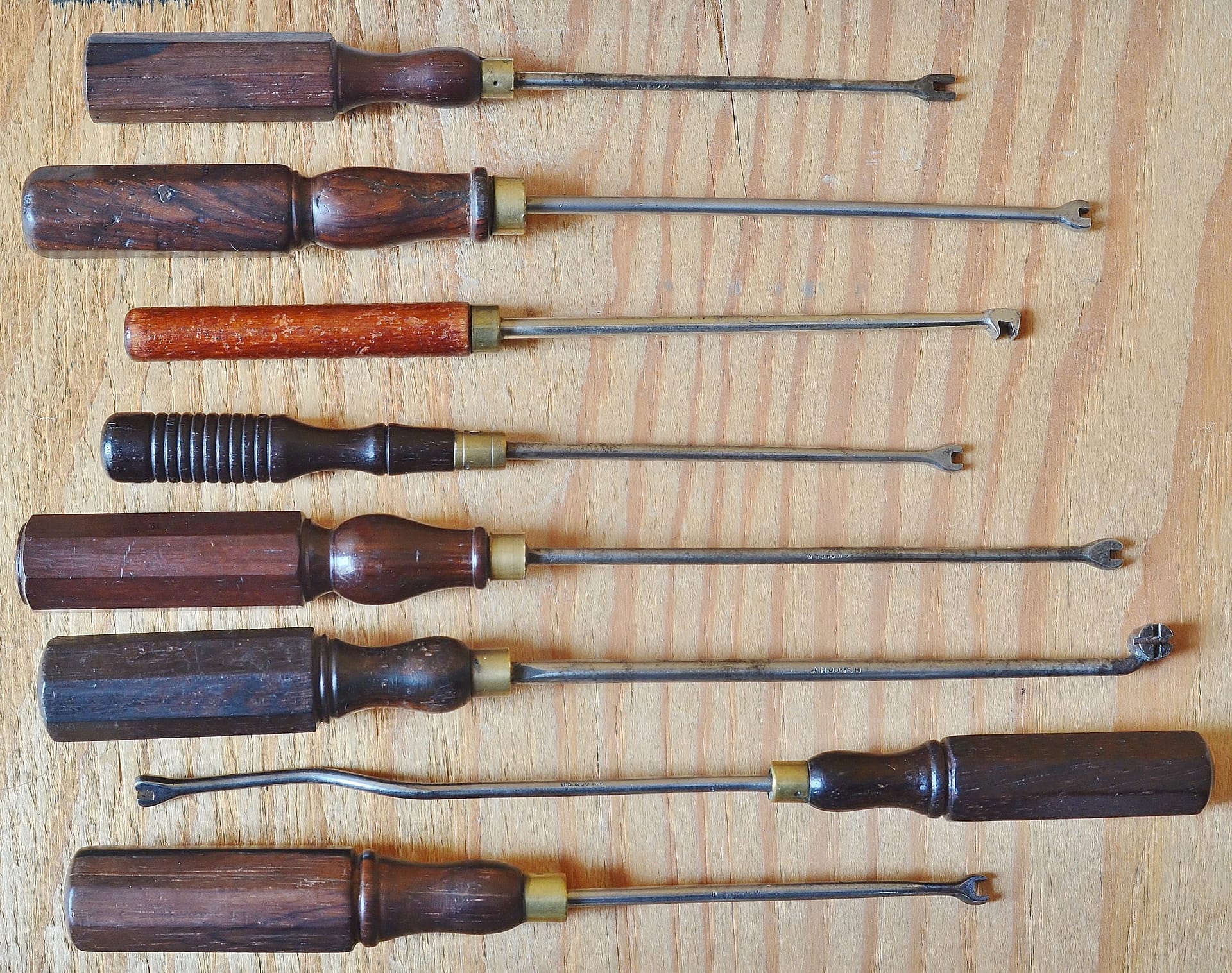
Top to bottom: H.S. Co. N.Y.; H.S.; H.S.; Erlandsen, with German silver and steel ferrule; H. S.; Lyon & Healy; H.S.: unmarked with nickel plating; Julius Erlandsen, large, with full London pattern handle.
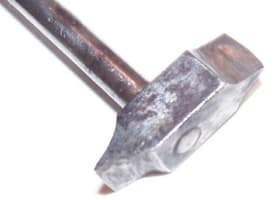
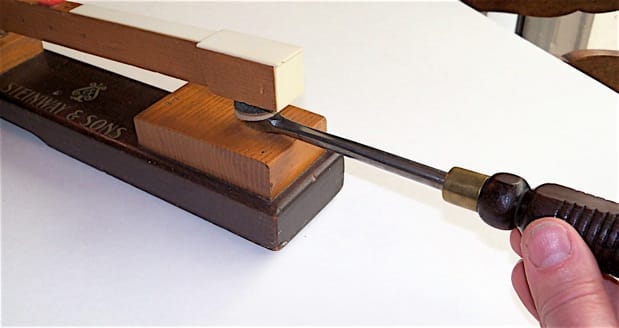
19th century front key pin spacing tool, from the Hornung factory, San Francisco, in 1990. Jeremy Shepherd placed the tool under the punchings. This heavy key spacing tool was flattened top and bottom, with a large crosspin. Shank is 3/8″ in diameter.
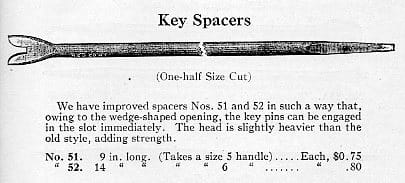
Top to bottom: Heavy spacing tool with large rosewood handle; heavy spacer with cross-pin, from Hornung factory, San Francisco; from Hornung estate; long Erlandsen spacer with quick insert feature; English pattern, offset, with double bevel at tip to push under cloth front rail punching (possibly the best design of the group); C.F. Lang, with stained hardwood handle. The very long key spacers (14″ to 17″ not including the handle) were made for factory use, and the length allowed workers to stand back and have the entire keyboard within the field of view, while actively working. It’s one of those details that makes a tremendous difference when when producing volume work at the same task for the entire work day.
H. S. 1925 catalogue. It’s identical to the example above as well as the Erlandsen key spacer included in the catalogue illustrations at the top of this page.
Capstan adjusting tools: top and bottom, for Duo Art pianos or concert grands with extra long keys; 2nd down, Lyon and Healy, 3rd down, Lyon & Healy, for Moore capstans.
Two craftsman made grand repetition butterfly spring adjusters for grand actions. Both made at Steinway & Sons, N.Y.
Julius Erlandsen Universal Capstan Regulating Tool, from Continental Music 1953 Piano Supply Catalogue. A later tool by Julius, probably introduced in the 1930s. This is the latest example of an Erlandsen tool pictured in a trade catalogue.
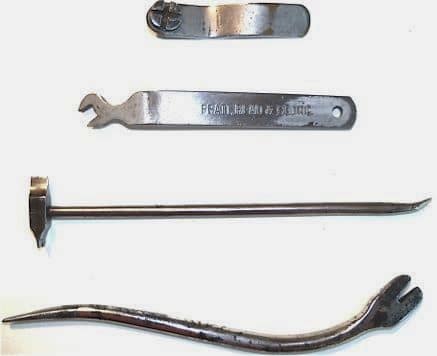
Regulating tools without handles, top to bottom: Homemade let off tool for adjusting grands with action in the piano Pratt Read capstan tool Offset screwdriver for rocker actions/ capstan wrench Capstan wrench for both square and Moore-type capstans
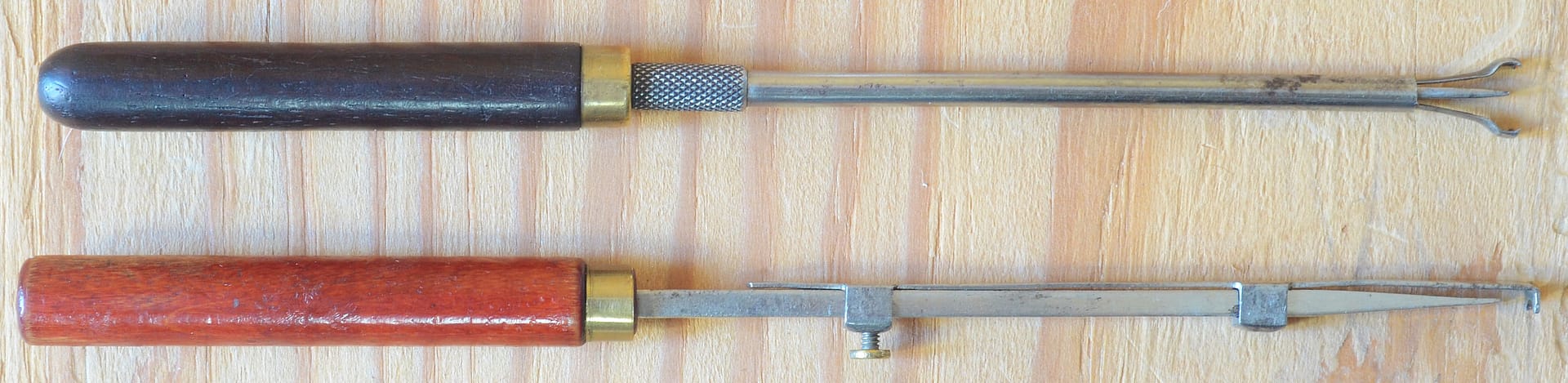
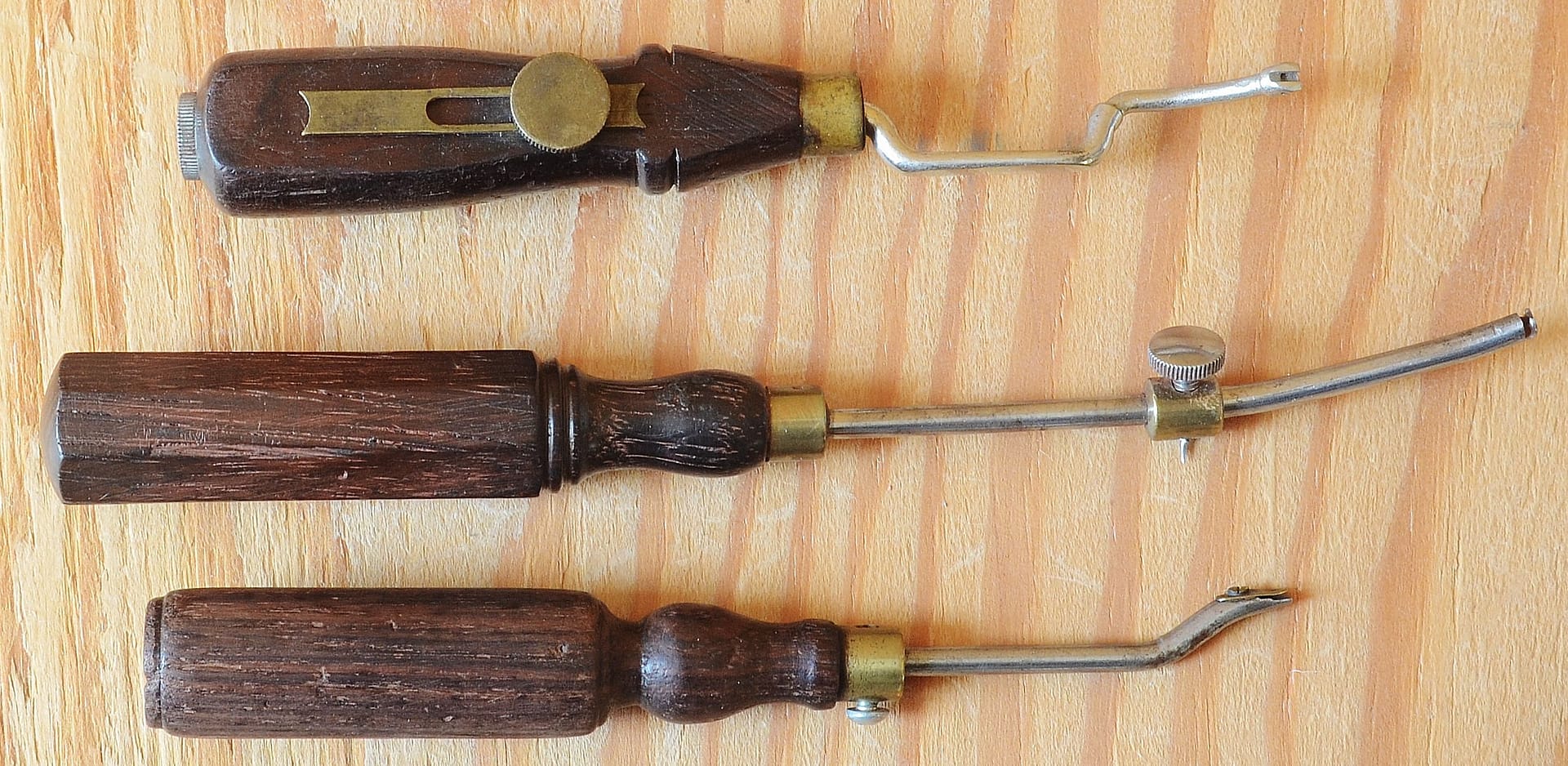
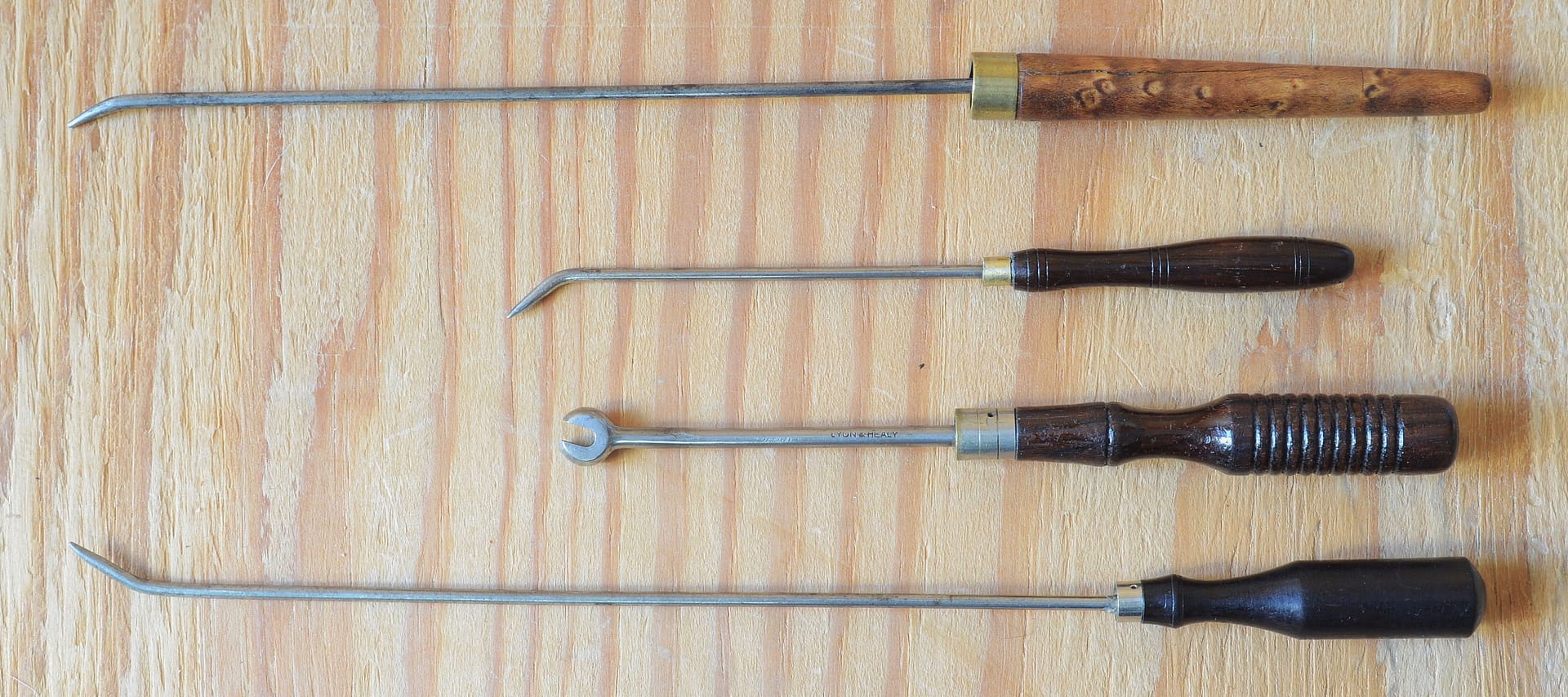
Damper wire adjusting tools, although sometimes listed in the old catalogs as backcheck tools. Top two are unmarked; bottom three were sold by Hammacher Schlemmer. The tool at the top has a handle made from a maple dowel, stained and varnished, probably from the early post WWI era. By this time, production of these tools with increasingly costly and space-consuming rosewood octagon handles became less of a standard practice, and by the 1930s, most regulating tools were sold with a specialized base made to be fastened into the socket of the combination regulating handle. Tools in the middle and bottom have an offset shaft.
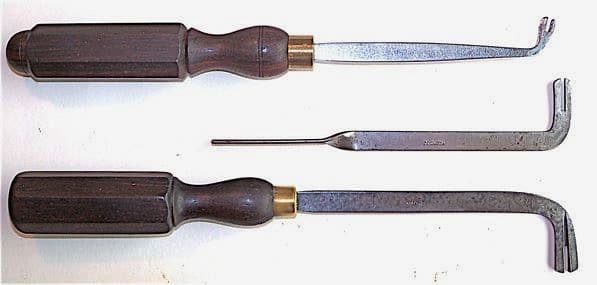
Wire benders, top to bottom: American Felt Co., N.Y.; unmarked; Hale, Boston; unmarked; bottom four H.S. & Co. N.Y.
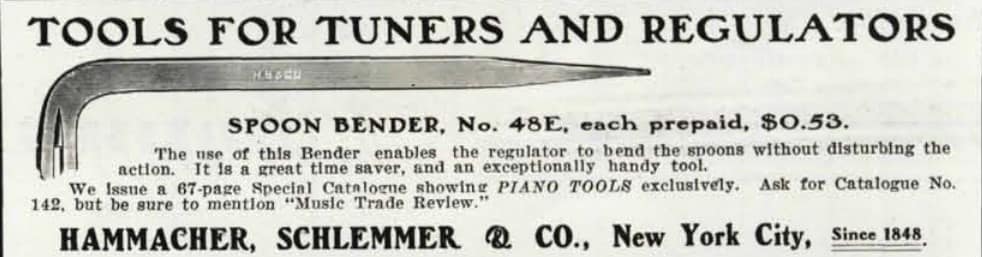
Hammacher Schlemmer Advertisement for upright piano action spoon bender (Erlandsen), in the Music Trades Review, 1903.
Top to bottom: J. Erlandsen, NY; H.S. & Co. N.Y.; C.H. Lang Chicago;H.S. Co. N.Y; Unmarked, nickel plated with full London pattern handle.
Damper head wrench, generally associated with overdamper upright actions, but not exclusively. Offered by Renner in the late 20th century.
Save
Sav